Friday, 13 February 2015

Why SHOULD I Read The Fucking Manual?

Manuals for games are a big can of worms, because there is this feeling in game design these days that it's just plain better to design things so you don't need a manual. Games are, after all, meant to be for everyone, including those of us who don't fink so gud. That's inclusive, and inclusivity is a nice thing... But I'm not entirely sure I agree, for several reasons. Still, let's start this discussion off with "What the heck do game manuals look like, and why did we need them way back when?"


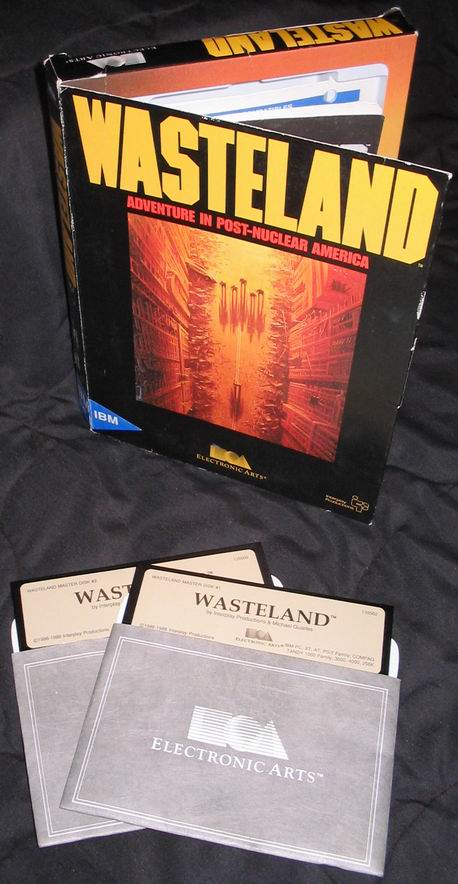
This here is the original game box for Wasteland, an RPG you may have heard of considering it recently got a sequel, currently in Early Access, and both its director (Brian Fargo) and its spiritual successor (Fallout) are pretty well known. Now, look a lil' closer, and you will see... Holy shit, that's a big ol' honkin' book, isn't it? And there's more than one of 'em! Gaaaaahd, how could you be expected to read that shit?

Well, firstly, you were expected to read dat shit because RPGs are often quite complex, and limitations of the systems they were on meant that you couldn't fit everything into the game. In Wasteland's case, there are two books: The actual manual, which describes the stats, how they interact, some skills (manuals of the time sometimes had misleading information for reasons of plot or designer dickishness. Not quite cricket, I know), and how to control what, at the time, was a fairly complex game (and, to be fair, still is). The manual served a second purpose, which is part of why manuals largely fell out of vogue: It allowed the designers to take shortcuts. Why work harder to make your UI more intuitive, when you can have a manual to describe it?

(Sometimes, though, folks are just bad at UI design...)

The other book, however, was the real doozy. It was a combination of copy protection, and a way to get around size limitations. See those floppy squares? Those are 5.25" Floppy Disks, and they had a maximum filesize of... 360 Kilobytes. Go look at your "My Computer" screen, or equivalent, and let's go downward. I have a 500 Gigabyte and a 3 Terabyte Hard Drive. My DVD-RWs for Let's Play backups have a 4.75 GB limit. Tera... Giga... Mega... Wow. Them's some tiny files, right?

The Wasteland Paragraph Book contains any long talky bits for the game, along with fake talky bits so anyone who wanted to try and skip ahead in the story could very easily fuck up, and it had something like 500 paragraphs. Let's assume the paragraphs had an average of 50 words, with an average of 5 characters. That's 125,000 characters. Each one of those characters takes, effectively, 1 Byte, so encoded in the game files, that would be 125 KB, or slightly less than half the allowed filesize on a disk of the time. In practice, it would end up a fair bit smaller (Probably around 40-60 KB), but like I said, it doubled as an anti-piracy measure.

It also ended up getting around another limitation. Here's a Wasteland screenshot.


Hrm. That's something like 20 words. They could have displayed the paragraphs, but it would make the game a lot more tedious to play. Since it's not really real-time, it takes very little effort to flick through the book, and everyone's happy.

But anti-piracy measures moved on from something as easily circumvented as "Read The Fucking Book/Take numbers off a card", and I'm actually sort of glad about that, because while they sometimes got inventive in a good way, they also started doing such boneheaded things as black text on carbon paper (which is red), and really small fonts, in order to discourage copying. If anything, this had the opposite effect, and I remember Dad and I tearing our hair out at trying to decipher the codes on the TMNT anti-piracy sheet, and eventually writing what codes we could on a TXT file and printing it off. Since not many folks I knew even had a PC at the time, this wasn't a ticket to easy pocket money either, more's the pity... Because the TMNT game in question was shit.

Another hotly contested thing manuals did was set up the lore for the world, or provide a miniature encyclopedia. "But Jamie!" I hear you cry "You can have an in-game encyclopedia now!"

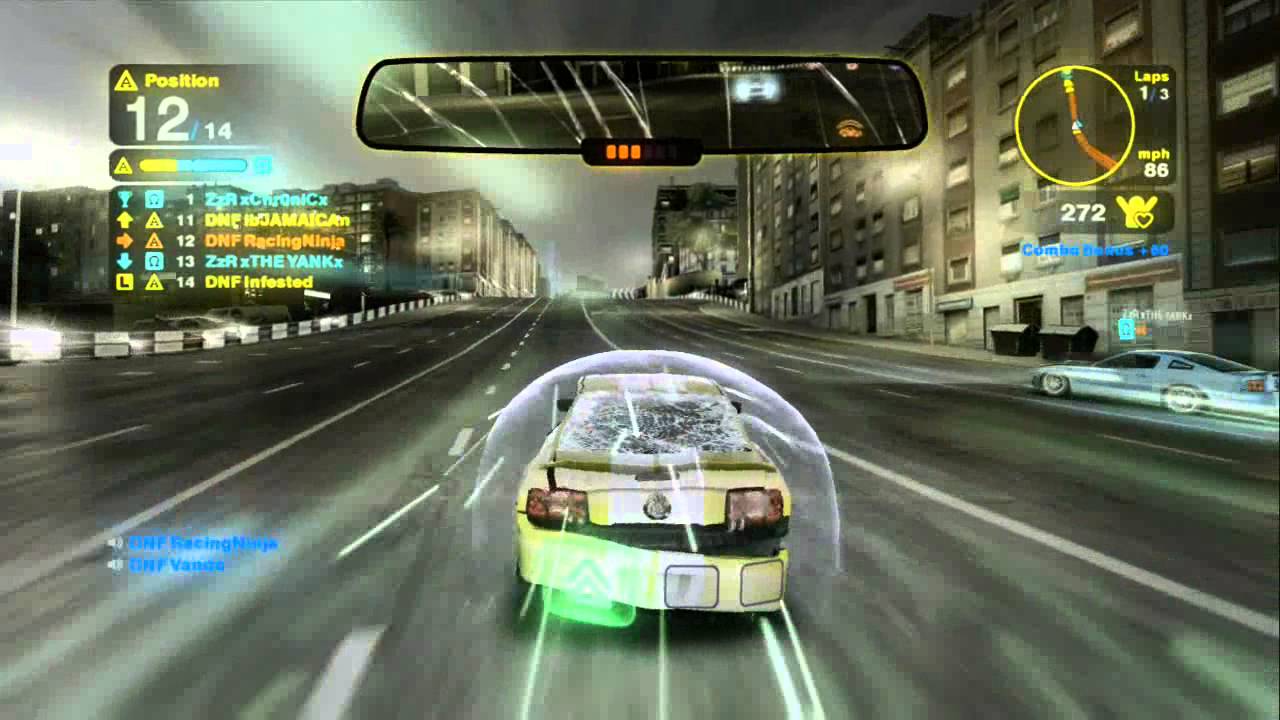
This is a bad in-game encyclopedia. Partly because it's badly written, but mostly because it's a FUCKING RACING GAME.

Yes. Yes you can. But it has exactly the same potential flaws as a lore-book, and it has one flaw that printed versions don't have: You can't read it outside of the game. Why would you want to read it outside of the game? Well, if your in-game encyclopedia is actually good, it would be because you wanted to learn more about this strange world you'd found your character in, to know things the designers didn't put in.

And here's where it gets complicated. Because modern game design quite rightly states that the hierarchy of tutorial methods (and, to a lesser extent, world building) is Do > Show > Tell. Whenever you can, it is better to either outright show an aspect of a culture in a game, or at least imply it. However, to show that it's not all that simple (Give respect to game designers, yo, they have a hard job), we have to consider flow.
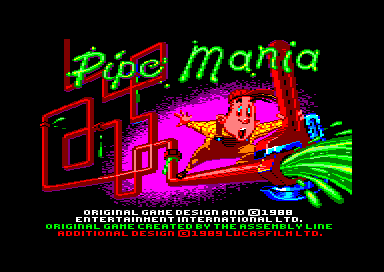
Whoops. Somebody fucked up their flow!

Flow is not, as some believe, a nebulous, arty farty game design concept, but something any good game designer has to worry about. Ever had that "Ugggh, this cutscene came in the middle of a fucking boss fight, and he attacks right after!" or "God-fucking dammit, now I have to look at my journal while I'm being attacked!" ? That's bad flow. It's not always on the game itself, as well: I've complained, in the past, of "Ugh, fighting breaks the flow of this game too hard" in Mirror's Edge, and in fact, that was a common complaint when it came out. But on examination? A lot of that was me, not the game. There are rarely places where you have to fight, and those places, it's pretty clear that, well, that's the only way out. The rest of the time, you have lots of options for just plain avoiding the cops that try and bar your way, and the game's simple visual language means you have very little excuse for not using the environment well.

In a turn based game, you don't have to worry about flow so much, so you can leave lavish descriptions and lovingly crafted stat pages right there in the game (although most double down and have a PDF you can alt-tab to or print sections of.) But in a more action oriented game, you just don't want to know right now, thanks! So doing this well helps a lot. I'm Let's Playing the series now, and have a soft spot for it, so let's talk briefly about lore done right in the Wipeout series.
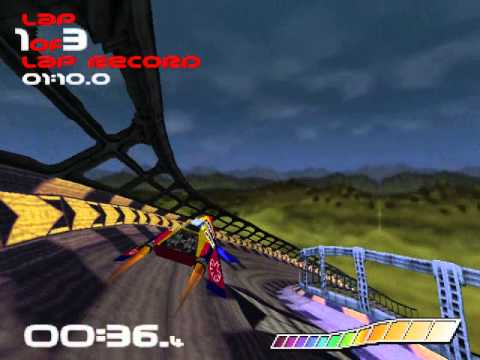
It helped that the game was fairly pretty for the time, too.

Wipeout's manual was pretty simple. It had to be, because PS1 manuals were generally quite small. But they wanted us to care about the world and teams. So they had team profiles they felt they couldn't fit in the game. Okay, we get a favourite team (Qirex for the win, as an aside!) But they also had little press releases that told us about the world... And it wasn't as nice a place as you'd think, considering Anti-Gravity had pretty much decimated Big Oil, and helped the environment a little bit. They had track blurb, that also added to this, and later games in the series also had tidbits of lore tucked into press releases on the official site, a timeline we could build up of the world... It was a technical racing game, but we had added reason to want to play it because the world was interesting!

That, and PS1 parties at raves, were both pretty useful marketing tactics, and the series sold pretty well, for the most part. So manuals can serve a useful purpose that isn't just "haha, you need this manual, noob!"

But the biggest concern, the one that really nails the lid shut, is that it's a) not cost effective to print manuals much anymore, especially when you have the PDF, cutting printing costs entirely, and b) It's more environmentally friendly. But there's a good reason Official Guidebooks, especially ones that hint at the larger world, or give info that just couldn't be put into the game, still exist, and sell like hotcakes.

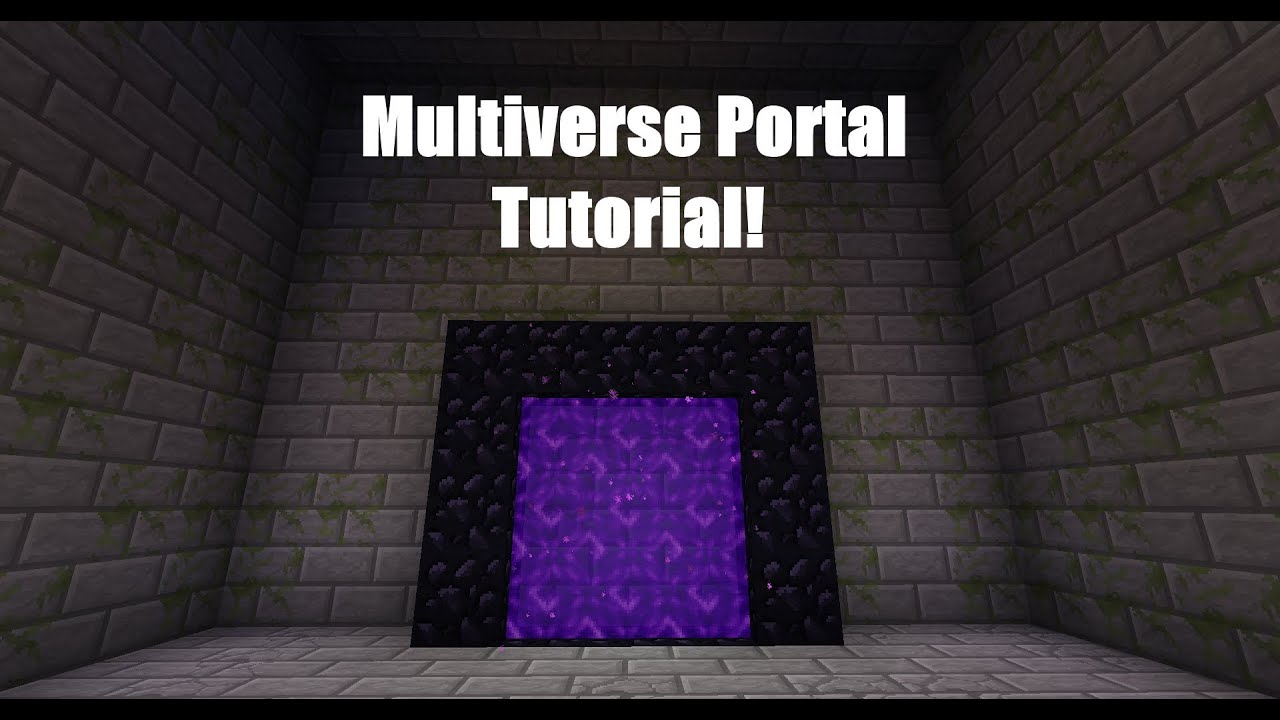
So how do we resolve this? Well, different companies resolve it in different ways. Portal and Dark Souls both do the "Implied world" and "Teaching through play", and that mostly works. I say mostly, because sometimes, not even excellent design can help some folks. Yes, you've tried to put a portal on not-white surfaces for the last half hour, dude, maybe it's time to try something different?
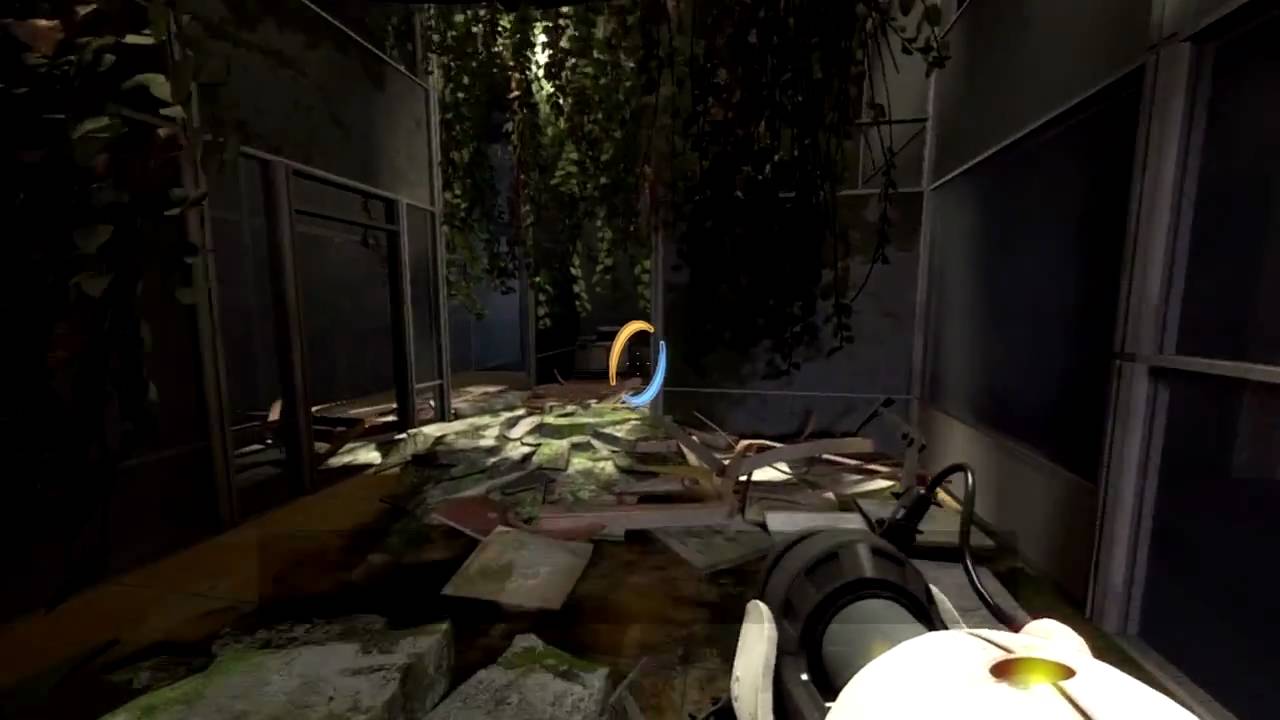
There is nowhere here to put a portal. Stop fucking trying.

Thief (the original one, not the bastard child of 2014) had optional lore, a tutorial mission, and again, implying details about its grim world, often through the hilarity of some seriously obnoxious guards (In a good way... You'd have to have played to understand why "Y'wanna go to the bear-pits tomorrow?" can send me into peals of laughter)

Paradox strategy games, and many others, do indeed have big honkin' manuals, and lengthy tutorials, and ohgodihavetoomanyindustrialistswhygodwhy... Maybe Paradox, as much as I love them, aren't the best example... And many RPGs have... the same WALLS OF TEXT AND LORE, but in dialogues with other characters. That's... a double edged sword, because when the writing and the voice acting is good, just like a manual, it's engaging, but when it isn't, you get "And LO, Did The Archimandrite Of Thessalinicamanica Blah Blah Blah Blah Blah Why Haven't You Hit Skip Already [important info] Blah Blah Blah."

So, when you're designing a game, spare a thought for the manual. It's good design not to rely on it, but it, and your in-game encyclopedia and whatnot, are important tools, even in something as simple as, say... A twin-stick shooter series. It can give players a reason to care about your game, it can clue players in to advanced strategies. You have to account for the fact that folks might not read it, but if you're going to do it, do it well. In game or out, it may well help deflect that old saw of "UGH, THIS GAME SUCKS BECAUSE [Long rant translated to: I didn't pay any attention whatsoever to the game] !"

It's still a valid option, even today.

Games Journalism: We Are *All* Only Human.

For anyone keeping up with gaming news, Peter Molyneux recently got it in the pants over Godus. Bigtime. While some things needed to be said to the British GameDev Wunderkind, others didn't, and it made me think of something we tend to forget: Everyone in the Games Biz, from the devs to the journos, to the players, are only human. And we tend to forget this. All of us.

The Devs

Warren Spector, from Martian Dreams.

Richard Garriott. Warren Spector. Graeme Devine. John Romero. These, and many more, are names to conjure with in the games industry. But we, both players and games press, tend to overlook the oddities and failings of these folk. Go look at Martian Dreams and Savage Worlds. You'll find a literal self insert of Warren Spector in both. In fact, Wikipedia has a selection of his self-inserts on the page about him.

They're good folks, but they're not rockstars. They have their failings. Tabula Rasa was a flop. Thief: Deadly Shadows definitely had flaws. Even the series I'm currently Let's Playing, Wipeout, Made Mistakes.

But we have a tendency to ignore this, and when we do discover folks have their human qualities, not necessarily good ones? We tend not to react too well. An extreme case in point: Phil Fish. Phil Fish is another dev who's been raked over the coals, for the crime of... Being abrasive and temperamental. And because he is a public figure, a celebrity... The reaction is disproportionate.

But let's look at the other two sides here.

The Journos

As someone who used to review, I'm just as guilty as every other game journo out there for being attracted by something that just... Doesn't... Work. In my particular case, a prime example would be Nuclear Dawn.

If you can instinctively make sense of this, congratulations, you could be a Nuclear Dawn Commander!

What, you haven't heard of it? But it rewards good team-based play, actually talking to other players, and... Oh, yeah, it didn't do very well because it wasn't accessible to the average player. See, the average player, for various reasons, just wants to god-damn play. They want to shoot mans, not stand in a corridor waiting for an enemy push they're not sure will come. They definitely don't want some asshole telling them what to do (Especially if said asshole turns out to be incompetent), and they don't want to spend time guarding said asshole from the enemy, even if that's a vital element of the game.

So what ended up happening was that whoever co-ordinated and/or had a decent team leader would steamroll the pubbies. Again. And Again. And Again. And lo, it Wasn't Fun. So the servers were nigh ghost towns, and the game didn't do nearly as well as its interesting gameplay could have gotten.

On the other end of things, for me, was Blur, by Bizarre Creations. Blur had problems. The track design meant that a reasonably skilled player could DNF (Did Not Finish) all the other racers on many tracks, people were having connection issues out the wazoo, and a third to half the vehicles were basically reskins. But the first part and the third in our equation, Players and Devs, came into play here...

Blur: The Big Boys Mario Kart. Oh ho. Ho ho ho ho ho.

...You see, Bizarre Creations also made Project Gotham Racing, which was, in many folks' minds, a Good Series. So when a review score was lower than expected, they came out to complain. I didn't get a whole lot of complaints (A whole ten, I think... I'm not a celebrity writer, never was), but, on the strength of those, my editor at the time claimed that I had been "experiencing day-one issues".

Three months later, I issued a re-review (Something many game journos will tell you is a bad idea), and nobody appeared to care one way or another. Bizarre, you see, had started copy-pasting responses to bug reports, claiming it was being fixed, while already talking about a sequel, and working on another game (Bloodstone, which also Had Problems).

They folded a few months after my re-review. Now, here comes the weird part. The players came out again, but they didn't yell at me (Who scored the game pretty low). No, I opened up the letters page of PC Gamer, to find someone blaming them for the demise of Blur. This was pretty irrational, as PC Gamer had been a lot nicer than I had, and didn't even mention many of the issues seen with the game.

It was a head-shaking experience. But it leads us nicely to the third part of our little equation.

The Players

The Bush-Wookie in his natural habitat.

In a very real sense, the players are a more diverse group than either the developers or gaming press. But what you see isn't that diverse at all, because what most folks see of a playerbase are comments, forum posts, and meeting them in actual play... And the bad tends to stick out like a sore thumb.

The Mass Effect 3 Ending. Starbound's "Caveman Tier" play. Fucking Bush-Wookies. The list of things players complain about, not always making sense, is immense. Let's take the Bush-Wookies as an example.

Bush-Wookie is a nickname for Snipers in the Battlefield series, especially Bad Company 2, because their camouflage... Well, it makes them look like Wookies from Star Wars. Also because it helps them hide in bushes. Duh.

The problem is, a good sniper, in pretty much any multiplayer game, can lock down entire areas of the map. And it's a massive pain in the arse to dig them out. Never is this more prevalent than in the Heavy Metal map of Bad Company 2.

Heavy Metal, aka OH FUCK LEAVE THE SERVER.

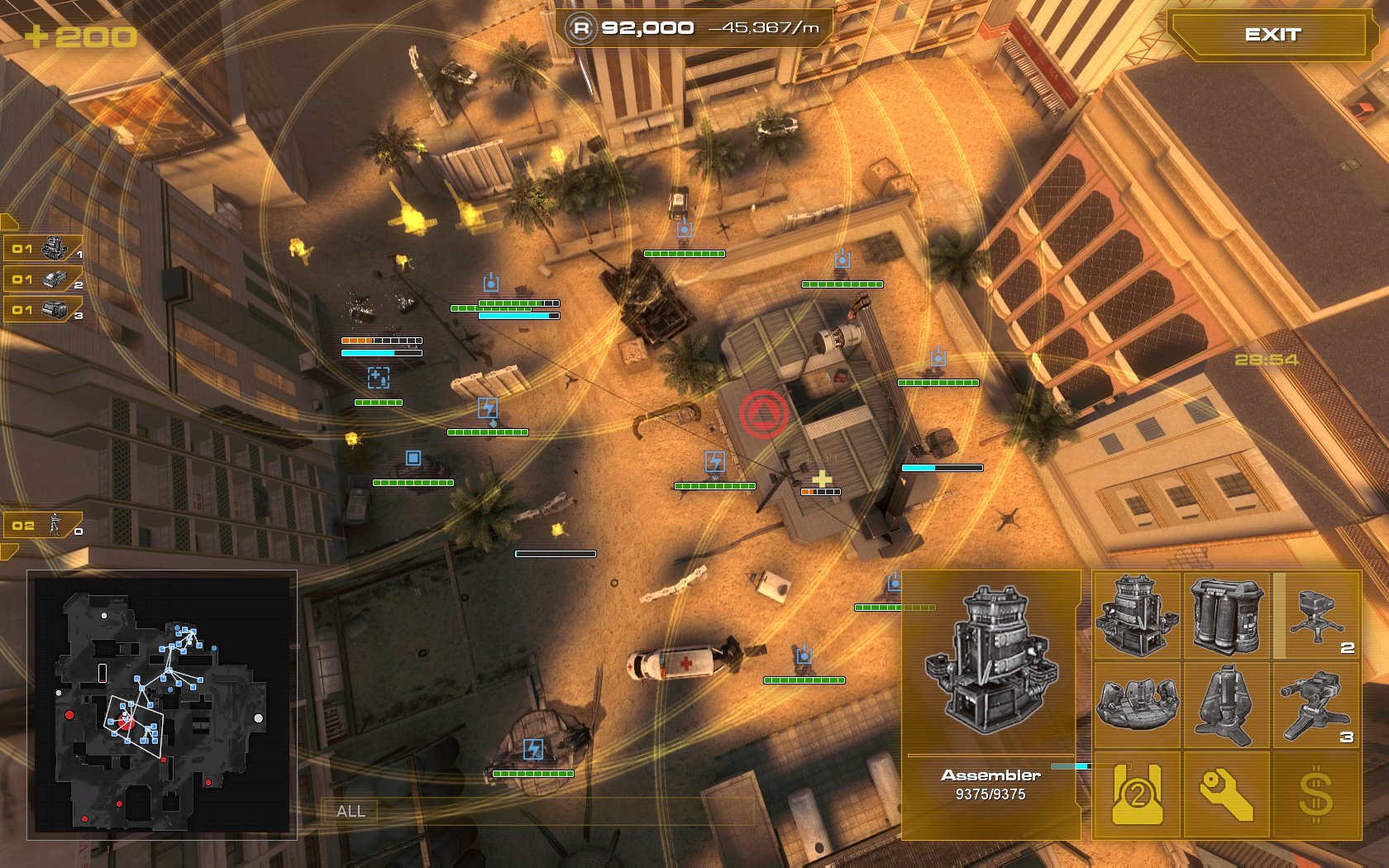
The map doesn't show it very well, but the middle capture point here is flanked by two hills, and there's an AA gun in the village, just off to one side of the point itself. Snipers/engineers in those hills can fire as far away as either of the other capture points, and getting them out often requires air support, which... Oh. Oh. Again, we find that the fun of the game is instantly ruined for the average player if they're up against a co-ordinated team. And, in the case of BC2, it doesn't even have to be voice co-ordinated, because the classes make it fairly obvious where you should go. The snipers will graduate to the hills, because there's a lot of cover and disguise up there. The engineers will graduate to the hills, because it's relatively safe from the AA guns, and allows them to kill the vehicles they're meant to. Meanwhile, the medics will assist the assaults, who will die in droves as they either try to take the next point along (Which will have everything coming their way), or try to take B (Which will be protected by a force that can efficiently deny you entry if they're even halfway competent)

In this map, among others, snipers are a massive force multiplier. It doesn't help that playing a sniper as realistically as possible (Moving after shots, not revealing themselves as best they can, staying outside the range of the other classes) means that the sniper has a reputation as a player out to ruin other people's fun.

It's not an entirely unfair point either, because some of them genuinely are. Which is annoying, because there's no easy solution. Battlefield 3 went with making snipers easier to spot and more likely to get into short range firefights (Which they'll often lose), but this makes playing a sniper less fun.

Wait, that's not the right image... DAMN YOU, GOOGLE SEARCH, YOU SHOULD HAVE TOLD ME WHAT TO LOOK FOR!!!

Part of this problem though, is that players go in with expectations, and when those expectations aren't met, they're unhappy, whether because it wasn't properly explained what sort of game it is, or because the mechanic was genuinely badly designed... Often, it's because they just don't get it. Good example of that: The Portal Gun. The Portal Gun doesn't make portals on anything but white walls (Covered in moon-dust, apparently), and both games try to show you this. But, because they don't explicitly tell you, and remind you, you get folks who completely fail to understand how it works.

Those people aren't necessarily stupid. The game isn't necessarily bad. But the players' expectations coming into the game may be unrealistic, or the game isn't communicating to the level of the average player.

Even this commentary on expectations is going to be subject to problems. I've seen these points examined before, and you know what I hear when they're discussed?

Entitled. No Moron Left Behind Policy. I Shouldn't Need A Tutorial, Or To Read The Manual.

Yeah, okay, players can be entitled (Oh, dear lord, they can be entitled!) It only takes a quick look at comments on negative reviews to see that ("How DARE you give X a 6/10! It's CLEARLY PERFECT!"). But many of these are knee-jerk reactions, whether on the part of devs, or players, or journos, and there's no easy fix for any of it.

No, really. We could say "Devs, please try to be more human", but that won't work without players shifting their worldview, and journos not instantly squeeing the moment Big Name is mentioned, and a lot of other things, too. We could say "Journos, please think more critically", but that would require devs and players alike agreeing what that means... And we've all seen how well that's been going so far... We could say "Players, please try to read tutorials more/shift expectations", but that's massive generalisations about a very diverse group, and it can't help but offend at least some of them.

We could say a lot of things, but a lot of it has to do with one basic principle, which I fully understand is hard for people (myself included). Be More Aware. For example, be aware that once a game has a flaw baked into it, it's often going to be very hard, even if you genuinely are a rockstar super-developer, to change it and/or get it out. Be aware that sometimes, you're not going to like the writing in a game, but that's no reason to scream bloody murder (Sometimes quite literally). Be aware that not all games are for you, specifically, unless you truly want to learn how to play them. There's a lot of "Be Aware", and while all those examples were for players, there's a lot of others for the journos and the devs too.

Funnily enough, this blog post isn't about fixing the problem. It's about Being Aware That It's There.

Friday, 6 February 2015

Going Back To BASIC(s) Part 2: Adventure Games Made BASIC.

So, here we are again, and we're back to the Usborne BASIC books. But instead of a mish-mash of genres, we're looking at three books from a single genre: Text Adventure Games, aka Interactive Fiction. There were a lot of IF games back in the day, and authors like Steve Meretzky and Scott Adams made... Well, a lot of IF games. The earliest was made around 1976, Colossal Cave Adventure (ADVENTURE for short), and, for a long while, they bloomed. Even now, there are folks who write Interactive Fiction, some of it extremely witty or thought provoking!

The Hitchhiker's Guide to the Galaxy: Still played today, still people complaining (Rightfully) about that fucking dog.

But we're in the wayback machine right now, and the three books in question are "Write Your Own Adventure Programs For Your Microcomputer", "Island of Secrets", and "The Mystery of Silver Mountain"

This, ladies and gents, is where we get into "More planning" territory. And the authors of each book know this damn well. They even, in some circumstances, tell you how much memory you're going to need if you expand the game. Because hey, RAM was a limited resource back in the day, and tricking the system into doing things cheaper was the way to go. But we'll deal with that soon enough, let's move onto the books.

Requires... 16K? But... Isn't That Tiny?


The latter part is still true, especially now, when descriptions are pretty much expected.

Adventure Programs (to shorten a somewhat unwieldy title), as with the other two books in this post, has a listing for only one game. Like the other two books, it's a book of two halves: The first half deals with what goes into the game, how it's pre-planned (And how you should too), and the second is the listing, with modifications for relevant systems as needed. The program is no slouch-fest to type out, at 214-280 lines (Depending on which 8-bit computer you were wearing out the keyboard on), and needs, at minimum, 16K to run (Your average BBC Micro B had 32K, but later models near the end of the BBC's lifespan had as much as 512K... Less common as they were...)

280 lines of code doesn't sound like much, until you realise that's 64 rooms, with 25 verbs (Actions) you can perform, and 30 items. Another 17 lines adds four (Admittedly awful) sounds to the game, and all of this is done, with deaths and an ending... In a tiny amount of space, for a tiny amount of RAM.

And if you hadn't read the first half of the book, you're not going to understand most of what it's actually doing. It gives you a hint on Page 7, but it takes the rest of the first half to hammer home how very true the first statement on that page is: "An adventure program is really a kind of database." The room names are data. What is in those rooms is data. The Verbs are data which have special cases attached to them, and all the game is doing is checking that if VERB+ITEM is used in ROOM, then a thing happens. Or doesn't happen. Or displays a different, and quite tragic result (Yes, it's an oldschool adventure game, so things can kill you.)

It sounds so simple. But at least three of those 280 lines of code are big, honkin', itemised lists.

Oldschool Values


Baticide: Noted as AEROSOL in the item database. No descriptions for items.

Thing is, this is also a relic of its time, and it shows. All of them do. All three books have treasure to collect. Adventure Programs even states how you can change the concept of treasure to Clues or Spaceship Parts, or whatever the hell... But it will still think of it as treasure throughout the book. Score is another thing. Nowadays, a lot of IF games only use "score" in the abstract, although we've rarely moved completely away from "score", or, more accurately "High(er) Score"... But since this is an 80s adventure game, the Skinner Box is in full effect, and every action towards completing the game rewards you with points. Which you can compare to the total. And bilk yourself out of.

In a reference to Colossal Cave, Light is important. And is in limited supply. There are no death states in the game that I can spot, but it would be pretty easy to put them in. And since there are no descriptions loaded, beyond simple names, you have no actual way of knowing (Except, of course, by being the poor schmuck who typed all this in) that the Aerosol is actually Baticide (Yes, it's Bat-Shark-Repellent.) So it's got its fair share of dick moves, too. How very 80s game design. Also, all three books share the VERB+THING parser that was to be common in IF for... Not a whole lot of years after this book, actually. Oh, did I mention it was called Haunted House? Maybe I should have.

The other two books, in fact, aren't as nice to you, albeit in different ways. The settings differ too: Silver Mountain has a treasure hunt, several uncooperative NPCs, and death states (including at least one Dead Man Walking if you miss an item you won't be able to get back to), all set in a fantasy world with an evil wizard, tyrannical mongol warriors, and, of course, trolls, goblins, and elves. Island of Secrets is somewhat similar, being Science-Fantasy, but has a time limit, strength and "wisdom" (mental strength) counted and changed, and some truly mindbreaking puns (The hero is Alphan, the villain is Omegan. AUUUUUGH!)...

A typical Dead Man Walking scenario. At least the book tells you it will be!

...Look, let's just say the writing of the games themselves is definitely not its strong point. The artwork, on the other hand...

That's one of the character spreads, from Island of Secrets (EDIT: Er... Later in the page). The location spreads are good enough that someone could probably use them as concept art for locations in their own game (So long as they don't mind some places being generic, but looking nice), and, just like every other book in the Usborne BASIC series, the explanations are also riddled with little illustrations showing you analogies for how various programming or gaming terms "work". While Haunted House was 280 lines, Silver Mountain and Island of Secrets both hit at least the 400s, up to 500 lines of code on some systems...

So, What Are We Learning, Here?

For all the flaws inherent in the programmed games, as modern game design would see them, these do adequately teach the more mind numbing side of things. A platformer, even today, is not as difficult as a graphical adventure game. Which isn't as complex as a good Realtime Strategy. Which, in turn, isn't as complex as a good Turn Based Strategy. And the more complicated you get, the more book-keeping you have to do, and the more planning you have to do. In this respect, only Adventure Games gets a free pass, because it tells you the kind of planning you're going to need for a good 10-20 pages. The other two, by contrast, spend most of the time making the locations and characters a hell of a lot more interesting than they mostly end up.

From top to bottom: Swampman (1 interaction), Omegon (3 interactions), Boatman (1 interaction). I do like the art style though!

I like to think of Adventure Games as the low-intermediate end of this set of books, showing you what needs to be done, while the other two show what can be done (Without, necessarily, doing it all).

Next time, we'll be dealing with just one book, that I consider the high end of things... Before we finish up with more of the beginner level stuff, which is, to my mind, the weakest.

...But still important,


Thursday, 29 January 2015

Going Back To BASIC(s): Some Early Game Design Books, and Why They Rock/Suck.(Part 1)

So, thanks to a game developer friend, or rather, her retweet of a question about gaming and game-dev books, I dug up a series of old books I remember from my childhood... Well, I only remember some of them, as, naturally, libraries don't always have a complete series in stock. But either way, we're gonna be mentioning most of them... And here they are. You can find them yourself at http://mocagh.org/loadpage.php?getcompany=usborne-hayes , and I recommend you do so if you were ever a BASIC fan, or just want to understand how (ho ho) basic programming could be sometimes, back in the day.

That... Is a fair few books. But, as we'll see, they have a fairly common pattern.

Now, one thing to remember about these books is... They're quite obviously designed for kids, or adults who like kids' educational books. And that's actually a little telling about coding books for this day and age (The series was published between 1983 and 1986, as far as I am aware.)

Why? Because on the one hand, they're more accessible than the programmer's guides for many 8-bit systems of the time, and, for the other, none of these books assume you're an idiot, explaining things without getting patronising, and even offering possible experiments for yourself you could look into.

An Example of not assuming you're an idiot: Telling you that it's easy to make mistakes in coding.
...It really is.

So let's start with the three "lots of small games" books: Computer Space Games, Computer Battle Games, and Weird Computer Games (There was also a fourth, Creepy Computer Games, but it's a bit harder to find.) In a lot of them, we're going to see the name of Usborne Publishing's Editorial Director, Jenny Tyler (Who also wrote a series of puzzle adventures for 8-13 year olds that I sometimes still look at when the mood takes me. :D )

The one thing in common with the games in these books is that they're small, manageable projects. The most complicated programs run in at something like 200 lines of BASIC, and it's not always guaranteed that the largest, most complicated program involves graphics (In fact, in each of these compilation books, the graphical games are between 50 and 70 lines.) However, not all of them are programmed the same way, and not all the books in the series deal with all systems (More on that in later parts.) Also, the games vary widely in "Fun Factor": Playing Hot or Cold with the computer via text was... Pretty disappointing, even in the days where a Scott Adams text adventure was Manna from Heaven. But still, they taught programming, and usually in a fairly logical way. Let's look at a few, shall we?

The Absolute Basics: The Aforementioned Guessing Games

Huh... So... Robots complicated enough to wage war are using single letter defusing codes?
I can feel 5-Year Old Me's skepticism through the mists of time, for some reason...

Two of the books (Battle Games and Space Games) begin with what is essentially "Hot or Cold", albeit with a wide difference in difficulty between the two. They both have simple mini-stories meant to fire the imagination: In Battle Games, it's a battle against the Robots, where you have a limited amount of time to defuse a missile before it goes off in Earth HQ (By guessing which letter of the human alphabet defuses it... Go figure), and in Space Games, you're trying to guess what force you'd need to escape an alien world in a stolen spaceship before the locals capture you.

In a way, these are the best starters, because they only involve simple things: PRINT (text), variables (Storing single bits of data that can be changed or referred to), GOTO (A feature in linear languages where you jumped around to a certain point of the program), IF...THEN statements (Explains itself), random numbers, and FOR loops (Do this thing X times)... Simple stuff. 

In another... God, even to 5 year old me, they were dull and tedious. Here's how playing Starship Takeoff (the Space Games one) usually went for me.

GRAVITY: 10
TYPE IN FORCE
> 100
TOO LOW
TYPE IN FORCE
> 200
TOO LOW
TYPE IN FORCE
[eight attempts later]
YOU FAILED -
THE ALIENS GOT YOU

Wonderful stuff. Properly looking at the code, I could have done better, but this was one of the games that never incentivised me to try. Shame I didn't, because otherwise, I would have realised (as I do now), that there are always only 40 possible answers (The gravity * a number between 1 and 40), and I have 10 attempts. Robot Missile, by comparison, had 26 possibilities (A-Z), and only 4 attempts. Both were frustrating as hell, so I never did.

Of course, there are always variations of this, so there's also multiple variable Hot/Cold (Intergalactic Race... Which was about picking angles and velocities of satellite launch to get it into the right orbit height), Which Monster is Weak to Which Weapon? (Monsters of Galacticon, where the "guesses" were your fellow redshirts), and other types as well. Eventually, these games move into teaching you about arrays, but the guessing games weren't very entertaining, although they were instructive in absolute basics.

Shooting Galleries and Simon Games

Okay, so this isn't code to a shooting gallery game... I just wanted to set something up for later in the post. And the shooting gallery games look boring, anyhow.

Another simple, easy to program category, these generally used the number keys, although it was pretty easy to change them to use arrow keys. But here, another concept gets introduced: Timers. All the timers were loop timers, which sounds a bit kludgy, but hell, it gave pretty consistent times. In any case, the most basic versions went along the lines of "There is an enemy who can pop up in one of X positions. Hit the right key for where they are (Between 1 and X) to shoot them when they appear."

Game wise, despite the ASCII graphics ( "0" for a soldier poking his head up from some battlements, "OO" for the Bug Eyed Monsters of the space version), they were simple, they were fun, and there was no gruesome "OH NOES, THE [THINGUMAJIG] ATE ONE OF YOUR CREW!" messages... More's the pity to the older, bloodthirstier me...

...Actually, come to think of it, I knew how programs worked by this point in both books, and added some in with an IF [score]<5 GOTO [line which then printed out that I'd been nommed on by Bug Eyes, and ended the program]. So young me was a bloodthirsty sort as well.

Of course, some of the games weren't shooting galleries, they were "Quickly work out/memorise this thing, then type an appropriate response." Alien Snipers had you quickly typing a letter that was X letters after the printed letter. Asteroid Belt had you typing a number proportional to the size of the Asteroid (represented by the number of stars it was made of.) Shootout was a straight reflexes game, where it didn't matter what key you pressed, so long as it wasn't BREAK (Which would quit the program on any 8-bit system that had the key), and so long as you did it very quickly after it actually told you to (The other shootist must have been walking backwards, because shooting early would mean you got the "He shot you!" message. :P )

They were definitely among the fun ones. But the main thing they taught was how to kludge the shit out of timers with FOR loops, something that is now... Well, we have dedicated subroutines in most languages now for doing that, so we don't need to be so clumsy ourselves...

A Sidenote: It's Amazing How Many Of These Involve Blind Chance

Even Repton was pissed off at this development!

Of the games in Space Games, Battle Games, and Weird Games, there are three main forces to contend with in pretty much all the games to some degree or another: Reflexes, Blind Luck, and Logic. And that's actually kind of telling. Not because these are basics of videogames (Although the second is only really glorified in the bloody handed Roguelike), but because, in nearly all of these games, they're pretty much all it is. There is no talking to people, no degrees of victory... It's all black and white, do or die: Shoot the Cowboy. Find The Resonant Frequency Of These Robot Guards to Kill Them Before Your Execution. Shoot Robot HQ By Guessing Where It Is In This General Area To Win War.

Multiple types of endings beyond "Win/Lose" weren't actually going to be a thing in games until after these books had seen the light of day. Talking to people would happen, but only in Interactive Fiction, and only in a limited sense (Hell, today is still a limited sense... But a less limited sense). And RNJesus puzzles (Where the answer is to pray to holy hell that the Random Number Generator doesn't hate you this time), are still in some videogames today, mostly received with horror (Repton 2, released a year after Space Games, would be lambasted for an area which had randomly falling asteroids that would kill you on impact, forcing you to restart the whole sodding game.)

So things have changed, and these books seem quite primitive in terms of game design... But not by as much as we'd like to think. More on that later, methinks... For now, back to -

The Outliers

Wait, I... Get to move and shoot?!? (Sort of... Sort of...)

Each book has its own little games that are neither about guesstimates, Hot/Cold, or reflexes. Take, for example, Death Valley. It's an ASCII Tunnel Racer, where you have to move left and right without hitting walls for a specified length of time. I for walls, * for you, so it would look a little like this:

I              I
 I              I
 I              I
  I              I
 I              I
I     *      I

Doesn't look too thrilling, does it? Here's me playing it, at the difficult width of 8 characters spacing, on a BBC Emulator. I still suck at that game, even today.

Doesn't grab you? How about a management game? Space Mines is kind of like the ancient Lemonade Stand game... Except it also has random events, like radiation leaks, or the market glutting, ruining your net take if you do too well on the mining end. These kinds of games thrive by being text, although I'm sure a talented BASIC programmer could add some graphics for funsies.

Weird Games has the biggest proportion of these, though, with an ASCII pachinko game (Skulls of the Pyramid), a sort of pacman game (You are a shark, avoiding a hunter, while eating folks. Sometimes, however, your controls briefly randomise after eating someone!), and a "Bombing Run" style game where you are a witch, trying to pick up spell ingredients by diving onto them (Flying Witch, which, sadly, has an RNJesus death as another core mechanic). There's even a small text adventure, at a whopping... Well, okay, for these three books... 200 lines (or less, depending on system)

Finally, we have the graphical games. There's only two (Missile! and Touchdown), but they both use drawing commands, which shows the downsides of drawing on certain systems (To save your eyes, I'll just tell you... It flickers. A lot. Many old games used User-Defined Symbols instead, to make life easier.)

In the end, it's the outliers that make these books truly interesting, and each one teaches something new. Scrolling (in systems which need a SCROLL command to do so, and just by the text scrolling itself otherwise). More ways to use the RNJesus. Dear god, even realtime games and directional controls!

But the games themselves can only teach so much. Sooner or later, the young game developer has to leave the comfy nest of a DIY book, and get out there and PROGRAM. Do these books help with that? A little.

How Do I Change Stuff?

Awww... You... Actually wait, you should and you did. Bravo.

For me to even pretend I didn't need to learn how to change these games to grow as a programmer would be arrogant. More importantly, it would be untrue, because I certainly struggled, even at a somewhat precocious 10, to fully understand what did what in a linear programming language. But the two books I had, out of the three we've been looking at so far, did help a little. At the end of each is a short programming reference, letting you know what does what, and how to do it. It recommends other books in the series, and some more advanced books (Like, y'know, the thick-ass BBC User's Manual that came with every BBC Micro). And it set you little challenges, simple homework assignments.

How do you make this game more difficult? How do you add a game over message? How do you change messages? (Actually, that one shouldn't really have been in any of the books, because how it described PRINT was pretty fucking obvious, yo... But hey, 5 year old me was chuffed to get such an easy assignment, let's not rain on his parade and cause a paradox where I become even more crusty and salty, eh?) At least half the games had suggestions on things to do, ways to change things, and it didn't take a super-genius to know that a game about shooting bug eyed monsters could just as easily be about throwing chalk at Demanding Teachers, that the context could always be shifted round.

In a way, that was the most important lesson of all: That games could have context wherever the hell you wanted them to have context, and that all the worlds of imagination were yours. It even had sections, like the one pictured, that showed you how to add things, although it didn't get into the complexity of some of the other books.

In the next part, we'll deal with some of the Adventure Game books, and why these really didn't insult your intelligence.

Sunday, 14 December 2014

Why "Objective", Performance/Tech Based Reviews Are A BAD Idea

So, one thing that I have seen people calling for is "More objective" reviewing. Sometimes, they mean "Less biased overall" (Which is good to ask for), sometimes they mean "I don't want political viewpoint X to be represented so god-damn much" (Tough titty, writers have political viewpoints, readers have political viewpoints, and if you don't want to deal with gender and politics, good fucking luck in life. No, really, good fucking luck.)

Sometimes, however, they really do mean "objective", in the sense of purely representing the technical aspects, how well it runs, etc. Let's illustrate how misleading this can easily get with two hypothetical reviewers. Let's call them Jim and Graham, after Jim Rossignol and Graham Smith.

Jim has a computer which often meets minimum specs for AAA games, but rarely optimal specs for the newer ones. So he can play the game, but he can't afford to get the whole experience (Because, spoilers, even guys who write full time for a mag don't get paid a whole lot!). He experiences some slowdown at certain points in the game, but, unbeknownst to him, this isn't because his setup isn't top notch. It's because he's using an AMD graphics card, and the game was primarily coded around NVIDIA cards. Yes, that's a thing that still happens, even to this day. So he, naturally, mentions this as part of his review. NVIDIA fans slam him.

Graham, meanwhile, has a swanky computer with all mod cons, an NVIDIA card, and... A top range anti-virus program. This causes some problems, and, because he has a top of the range setup, he makes a bigger deal out of it. A week later, it's discovered that his particular anti-virus program fucks with the game, and he looks like a twat.

Meanwhile, both of them use different routers, and have exactly the same problems in multiplayer, problems which are widely reported. Their editor, Steve, doesn't have these problems, and writes an apology about both pieces when the folks who didn't experience these problems, and didn't notice all the complaints, decided to write in to say that they shouldn't lower the score based on this "nonexistent problem."

...Three months later, the readers look like twats when it turns out that, yes, the netcode was shit all along, and they start experiencing problems and complaining. And nobody's happy.

All three of these things have happened at least once. Because there are so many different components for PCs, software and hardware, and that means Your Mileage May Vary. I've seen windows updates, graphics driver updates, lack of graphics driver updates, all sorts of things fucking with performance in games that sometimes, it's hard to tell what's actually causing a problem.

"Ahhh, but consoles are different!", I hear you say. Perhaps. But sometimes, consoles look like they're working when they're actually about to break, and this, too, can occasionally affect reviews. Less than PC reviewing, it's sure, but you still have to use a router to connect, an ISP, so keep in mind that no system is free of this.

Then, we come to another issue: With only certain exceptions, older games re-released will, on a performance based scale, consistently score higher than newer ones. For example, I can play Jet Set Willy with so much less hassle than I used to have. Before, it was "pop a tape in. Is the tape clean? Is the cassette drive jammed? Do I have the cable connected?"

Now? "Put thing on hard drive, run program/emulator, fiddle with performance settings a little." 100000/10, much god-damn better than it used to be. Sonic 1 runs far better, on my current system, than Lichdom: Battlemage, and so it scores higher.

"That's not what we said, though! We meant as they come out!"

Ah, you're right. But re-releases are often reviewed as new products, because some of them (Not all, but some) come with slightly swankier graphics, and a slightly improved engine, and nothing else. Oh look, that re-release, on a performance base, still runs better than brand new AAA game, because it didn't have extra fancy gubbins.

Indie games would consistently score higher on a performance basis, because they're less resource intensive and smaller. The simpler the game, the higher it could score on a performance basis. And then comes the real killer: You then have to consider how much performance the game needs compared to its compatriots. Is it "objectively" better because it needs less resources, or "objectively" worse because it doesn't need to be as effective in using your computer's resource allocation?

"But you don't need to know these things, all you need to know is whether it's 'objectively' good or bad on your system, let readers..." No. Stop right there.

"Good" and "Bad" are rarely objective statements, because they're value judgements. You're stepping into "Worth" territory, and if you think that's something that can be objectively judged, I'm going to laugh. Hard. An object's worth changes, fluidly, based on subjective factors.

Good example: The white jacket I wanted for ComicCon. It's worth less to me now that I don't need it for a costume, because when I tried to get it, it was for a specific purpose. That purpose has been and gone, so it's "worth" less. If other people don't like how I look in it, it's worth less based on their subjective views, because it's going to get dickheads yelling stupid shit at me, which reduces its worth because of the hassle it cost me. If I lose or gain weight, it's going to hang differently, look differently, and so have a different worth to my self-esteem.

Then there's all the factors you're now leaving out, whether due to space or time constraints. Most reviews are 500-2500 words long. That's it. Are you going to read an article that's 2,500 words about how it performs on System X with Hardware Y,Z,A, and B, when you yourself have System X with Hardware C,D,E, and F (Not to mention that the reviewer probably won't have even noticed that Software G, which you have, and they don't, causes bugs in the game)?

Would you read it if it didn't comment at all on the writing, or great moments in the game, or how a mechanic feels like it fits with the theme you think they're trying to portray? All of these are subjective things you'll be missing out on: The cornering on Burnout Paradise isn't, by any means "Realistic"... Hell, describing it objectively, it would be "The lower statistic X is, the more likely it is to rotate the vehicle you are driving in a manner more consistent to 'sliding' than 'turning' , especially at higher speeds." ... But it's fun, not to mention collisions. We like collisions in racing games, right? "The collisions are rendered using a physics engine that -" GOD STOP, PLEASE, THIS DESCRIPTION CAN GO ON FOR HALF A PAGE, AND IS NOWHERE NEAR AS EFFICIENT, FOR A READER, AS...

"The collisions, meanwhile, are sufficiently meaty, with lots of crumpling, slow motion replays, and a delicious feeling of 'Yup, that car is fucked, and there is no consequence for this. God bless Fun'."

Which is, you'll note, largely subjective. Long live subjectivity, I say!

Wednesday, 10 December 2014

New Ideas: Why Listening to Other Perspectives *Helps*

So, while it may not seem it, I've been working on a game at a glacial pace (Mainly because, before concentrating on gamedev, or reviewing, or a number of other things, I want my life to be stable, and, quite honestly? It isn't, not really...), and writing down other ideas for the time when I'm actually able to work on them.

But recent events, and new acquaintances (Hopefully friends, but I'm not going to be presumptuous and assume such) have encouraged me to go back to the drawing board. I actually rewrote that last sentence, because I said "made", when, in reality, "encouraged" is a much better word. I should also note that while I go into two folks here (and a third group), there are many more, so if I don't mention you, don't take that the wrong way, please!

You see, these perspectives have not only given me new ideas, but also, before they're even fully fleshed out, criticisms of those ideas, areas I can improve. And, as anyone who's worked on creative projects knows, a well constructed criticism before you've set your projects in at least clay is extremely useful. Obviously, a less well constructed (or destructive) criticism can sink a project, but since this isn't the case, we'll merely mention that, and move on to the folks I've met, and their perspectives.

Let's start with Veerender Jubbal . Veerender is one of the nicest people I've met in recent months, he happens to be a Person of Colour, and he happens to be a Sikh. Despite my saying "happens to be", these are actually both quite important. Because just like women, the video-games industry does not appear to have much of a PoC perspective, and Veerender was the first person in a while to remind me of this. More folks followed, and one group in particular will also be mentioned. But let's take a brief moment to digress on my main project (I'm not afraid of someone "stealing" the idea, because A: Not a lot of folks read my lil' ol' blog, and B: Each developer puts different touches on much the same basic idea. This is a kind of diversity, but not in the sense we're going to discuss.)

My main project at the moment is a game called Section M. It's inspired by three things: the works of Charles Stross (Which I may never live up to), the works of Howard Phillips Lovecraft (Which, in a sense we're going to go into, I don't want to "live up to"), and Covert Action, by Microprose. Set in an alternate 1930s-50s (Still haven't *fully* decided yet), it is planned to have similar approaches to Covert Action (Minigames as a mechanic for the duties of a covert operative attempting to disrupt the plans of various organisations in a Cold War setting), but set in a world where the Great Old Ones were given temporary lease on the world, which led to horrors greater than World War II, changes to the geopolitical structure, and the bringing to the fore of the dangers and wonders of the supernatural.

Obviously, I am somewhat of an idiot for making this my first major game project (Which is why I'm also, when time permits, working on smaller games to make sure my skills are up to the task), but Veerender has highlighted a certain aspect of this idea that, to my shame, I didn't actually notice that much before.

Where are the Sikhs? Where are the People of Colour? Many games in the modern day (A little less so in earlier games, where characters were more of a Tabula Rasa (Blank slate you project yourself onto)) have all the main characters as white heterosexuals, often male, and when People of Colour are put into games, it's in roles already noted as ideologically contested (Meaning, generally, offensive stereotyping and creepiness... Not the best summary, but it'll do for now). The Spirit Warrior (Native American), the Token Black Guy Who Dies To Save The White Hero, The Mystic Indian... There's a big ol' list of stereotypes, and even many games today include them, unaware of how somewhere out there, there's an entire segment of folks they just pissed off with one character.

Now, this goes back into a comment I've thrown out a few paragraphs back: I don't want to emulate all of Lovecraft's themes. I specifically don't want to emulate the fact that he projected his own dislike/fear of People of Colour and his attitude toward "miscegenation" (Interracial relationships, and I put it in quotes because the term itself is... Well, not the most enlightened, as it deeply implies biological differences between white folks like me, and People of Colour that weren't, and aren't actually there.)

Go read a bit of Lovecraft. Notice that many of the villainous individuals and groups in his works are, in one form or another, interracial ethnicities. As an important aside, I grew up with the term "half-caste" for folks who are children of white and non-white groupings, and, even fully aware that it's considered an offensive term in the modern day, I have to edit myself not to use it as a description... Which, if you think I'm the tolerant and open-minded person I believe myself to have become, is a single example of why racism is so problematic to deal with... Because often, those of us who grew up with certain words still reflexively use them, even though they fully understand why it's not a good idea to do so. (Caste means "purity" or "race", so... Half-pure, half a "race".)

So this now leads me to feeling that I want to actually think about other cultures within this world, outside of "They exist", and to explore, somehow, somewhere, the cultural identity of these fantastical races that may have cropped up in universe. Which neatly ties into the next person I wish to talk about.

But before I do, let me link you to a stepping off point for exploring this yourself: I Need Diverse Games (and their Twitter feed), a Tumblr Blog exploring issues of race in videogames, and some other perspectives you may want to explore if you're a game dev.

Okay, so we mentioned cultural identity. Cultural identity encompasses a lot of things, because, surprise surprise, there are a lot of cultures out there, all with differing attitudes to beauty, women, men, LGBT issues, race issues, politics... And religion. Now, I fancy myself somewhat of a hobby scholar when it comes to religion, but there are those who seriously study the subject, and those who then apply this thought to the theory of game design. One of those individuals is Jenni Goodchild , who studies Theology and Philosophy. And she, also, has made me seriously consider aspects I am ashamed to say I had not considered seriously before. Namely, religion in video games.

I won't go into too much detail on that one, except to say that my own perspective is a syncretic belief, essentially pantheist in nature, that nonetheless does not place deities very highly on the trust scale. I'm also going to start by linking a video, specifically a recent talk Jenni presented for VideoBrains: Playing Games with Gods: Why Games Need Religion

Don't worry, this blog post won't go anywhere while you watch it, I can quite happily wait. Especially as it raises many valid points about how we don't really think about these things. And, because I wish to change this, I will quite happily own up to being guilty of this. Points to especially listen to so far include how Bioware might not have thought their "different" religion through, how Civilisation: Beyond Earth deals with religion in a very interesting way, and how the Elder Scrolls series, essentially... Doesn't (or rather, kludges it somewhat). That's just from the first half of the talk, by the way.

So now, I find myself quite happy with this "predicament", because both of these people have highlighted more places for me to potentially explore. Yes, okay, I now have more work to do before I can consider the game's setting, lore, and the mechanical support I may have to introduce into my project, but at the same time, these two people have, by drawing attention to how little I've previously thought about these things, opened up whole new cans of worms for me to slop my hands into, feel, and examine... If that sounds gross to you, many folks who work in creative fields, even as a hobby, think of concepts as things we can explore, dissect, get our hands dirty in, and we love it. We also love folks who give us ideas, especially by pointing out areas we can improve in, and, more to the point, how to improve them.

So be fully aware, game devs, that more perspectives may be, at times, confusing, distracting, more than a little heartbreaking... But by taking in, by wishing to know other viewpoints, and to understand how your viewpoint will nearly always be lacking in some area compared to someone else's, you can not only improve your games... You can improve yourself.

I only hope I do at least an okay job of that. And I hope you do too.

Monday, 8 December 2014

The Dam Broke Today (And Why It May Not Be A Bad Thing)

Don't expect amazing writing here. I'm not editing this beyond correcting my spelling as I go, this is something that has to be written, has to be written down raw.

So, for those who know me, or read my blog (All some of you), you may remember that I have depression. It's not severe. At least, I thought it wasn't. And maybe it still isn't. I just don't know for sure. There's only one thing I know for sure:

Today, the dam broke. Just a little, but enough that I was getting strange looks, because it was pretty plain to see on my face. It happened just over ten minutes ago. I'd just finished posting a series of old vignettes I'd written, based on characters from tabletop sessions (And some who, sadly, never reached a table to have their tales grow, like Finlay Houlihan, the Irish Hunter, or Saint Nicky, the Demon of the Spring Court)... And, just before I left the house, I tweeted that I had to sort the electricity...

...Which is when I started crying. Not full on tears, and it still isn't full on tears, bawling, tearing of the hair, that sort of thing. But it's pretty obvious that my many masks had slipped, and even as I'm writing this, I have to pause for a moment and take a deep breath, close my eyes.

But not to fight back the tears. Because, for the first time, perhaps in a long time, these tears are healthy. I want you to understand that. I need you to understand that. Because a big part of depression is locking your heart away, a little piece at a time, so that you don't do this anymore.

It's not the done thing.
You just need to man up.
What do you have to feel bad about?

Right now, as I'm writing this down (You'll see why it has to be written down soon, I hope), I know what I have to feel bad about. I've reminded myself, and opened a door I closed on myself some time ago.

I have songs, but I only sing them to amuse close friends, people I trust. I locked away those songs, because they're not the done thing.

I have stories, so many stories, so many dreams, and I locked most of them away, treated them almost clinically, because technique, writer, technique, you'll never get good if you don't master technique before flair, or feeling.

I have love to give, so much love, and nobody seems to want it. There are friends, family who accept it, and I love them dearly for the kindness they pay (And it is a kindness, for they know as well as I how valuable a gift it is to give)... But as much as I love them, I am too far away from most to share this love, and perhaps I've not found love in recent years because I don't want to show someone how much I want to hold them, kiss them, caress them, because if you do that right off the bat, no matter how passionate a person you really are, that's creepy, what a creeper, what a freak.

Even knowing that some of these things are exaggerations, my mind magnifying the pain, the fear, the loathing, I know they're also true, at least to some extent. We fear close contact. We're told not to sing, to show joy, after a certain age. We're told that having our own look is unfashionable, or dressing like a douche, or asked why would you want to look different? Answer? Because we want to show people more than one aspect of ourselves, or we want to change ourselves for the better, reach the ideals we know exist, or we just do it to have fun.

The dam's closing up a little now, but I want you to know that, for all that this has sounded like a bad thing, that dam is holding something back that should be in the light, plain for all to see. I shouldn't feel the need to hide it.

I have songs, but I do not sing.
I have words, but I concentrate on meaning, on interest, rather than the raw emotion.
I have love, but I do not express the passion in my soul.

This short (and it is short) outpouring of pain and grief and loss and a million other things that have quietly reverberated through my mind and my heart? For one terrible, awe inspiring, and blackly beautiful moment, they came out. You may think "Oh my god, he's in terrible pain" or "Such a god-damn drama queen!", but the fact is... They've been there. They've been there for a long time... And it is not healthy for them to hide so well.

Today, the dam broke. Just a little. And though folks inexperienced with depression won't think this, that is a healthy thing to have happened. Even if I am crying a little, I'm more worried that the tears are drying up than that they started.