Showing posts with label Rants. Show all posts

Wednesday, 25 March 2015

On Games Journalism: The Complications.

So, Joe Martin, a short while back, wrote a deservedly scathing piece on Games Journalism and Money , specifically the phenomenon (Which I myself have fallen victim to at least once in the past, for reasons I'm going to go into) of unpaid reviewing, often badly justified. I'd recommend you read that piece first, because it's an actual concern, and it's pretty widespread. Furthermore, I'm going to go into a bit of detail as to why this hurts the industry in general.

So, the problem of pay is one that has struck journalism all over, but has affected Games Journalism on pretty much an endemic basis, pretty much since the internet hit. There are also several factors that complicate things, and it's those I want to go into a little.

There Is No "Ideal" Pay Scale


I thought I understood this game at about five hours. Then I hit the biiiig difficulty spike for completionists at around fifteen. I still play an hour or two every now and again, but it will be a long time before I finish it.

That you should be paid for your writing, and that the review copies are tools for your job, not the pay itself, is indisputable. It is a product you are meant to review, for your job. But there are only two types of payscale out there: Flat rate, and per [X Period]. Neither of them are ideal for games reviewing. Let's start with per hour, to illustrate the point.

Let us say I am paid £6.75 an hour (Pretty close to the minimum wage for my country) for reviewing one of two games. One of them takes four hours to complete (Allowing a complete picture of the game), another can be completed in thirty hours, but a complete picture of how the game works may take up to fifty. Bam, instant lack of incentive to choose the smaller (But possibly better) game. It doesn't help that, unless it's on Steam, your editor can't actually check how many hours you've played unless all work is done in the office. As any freelancer can tell you, this mostly isn't where you're doing things from.

The same applies to a flat rate, but the other way around... I am encouraged to pick the smaller game to review, because it will give me a better return on my writing. It must also be noted that how buggy a game is can further skew this, one way or the other. Sword of the Stars 2, for example, brought my computer to a BSOD four times when I reviewed it, and if that had screwed my computer? Well, then either the editor has to fork out for replacements (Providing the company has such policies, and really, since they're also tools of work, they technically should), or you're out of pocket for not only the review (Which won't be able to be technically finished), but also the replacement parts.

"What about a sliding scale?" Ah, well that disincentivises the editors and owners from larger games. They have to pay you more, for a larger product.

Personally, I'm okay with a good flat rate, and so are most folks I know. But it's not ideal, and I doubt it ever will be. But so long as I feel compensated for the hours of work, I'm good.

Many Editors Won't Take Ex-Unpaid Writers

You may like my writing, you may not. I hope you do, because I enjoy writing, and I enjoy talking about games. But the very fact that I have, in the past, gambled on a startup which has pulled this unpaid (Oh, but we'll pay you if the site starts paying out!) bullshit has, and will bar me from writing for many paid sites.

In my defence, I will say that unemployment makes you do desperate things at times, reaching for any olive branch that will even have a chance of getting you out of the dole queue. But it also needs to be said that punishing the potential writer for taking such a gamble, out of desire for entering a field that, quite frankly, isn't amazingly friendly to newbies (Due to limited paid positions, and a relatively low turnover in writers) is Not Cricket.

Judge a writer by their writing, by their passion, their style, and their eye. Please don't judge a writer for falling for promises, because as it stands, it's not easy to get in to the treehouse.

Why It's Hard To Get Into The Paid End


A selection from Gamejournalismjobs.com ... Most of these adverts can and will use the language in Joe's article. Oh, it's always so fun to scroll through the- [shoots self]

Go google game writing jobs. I'm a member of a LinkedIn group for video game writers. I search every now and again. And 90% of what you find will effectively be these unpaid internships. Even many of the "paid" positions will either have some restrictive conditions, or will have catches. I'm looking at one right now that isn't paid in the work sense, but offers $30 for the "best contributor of the month". Of the month. I'm looking at another, and I don't actually see a mention of pay beyond its existence. I may ask them what, exactly, they're paying... But I don't expect a very useful answer.

I can remember the last time PC Gamer made a call for new freelancers. because I sent a piece in. I can't recall getting a reply back, though. And you can guarantee a lot of writers applied. We've already mentioned low turnover on paid sites, but another problem is knowing which sites pay. Because you can guarantee jobsites like Indeed or LinkedIn aren't too helpful. You can definitely guarantee many places and groups specifically for game journalism are going to be a fucking slog, because all of them, to some extent or another (With an average of "Two hours before potentially finding an actual paid job on a given day) suffer from the problem I've already mentioned.

It's Not A "Real" Job

I'm writing this one from a mainly UK perspective, but it's true nearly everywhere that, to many folks (Including our "lovely" Department of Work and Pensions), writing reviews, much less games journalism, isn't a "real" job. Never mind that breach of contract is a real thing. Never mind that reviewing and games journalism has a code of ethics. Never mind that, if you're doing the job, you should get paid for it. Getting advocacy for rights to the pay that you deserve is an uphill struggle, because the majority of folks who could advocate for you, who could punish potential employers for an unlawful (and unethical) internship contract, aren't going to, because people still think of games as this limited, almost whimsical field.

"Oh, you play games for money? How quaint."

Yeah, tell that to the QA Team who are tearing their hair out (sometimes literally), right this very minute, when they're told "Oh, we'll wait for the Console QA team to report this bug before we take it seriously" (An actual thing I have heard from at least one QA lead, although I will protect the sources). Tell that to the copywriters, panicking because there's no way anyone's going to buy this thing the company rushed, no matter how they dress it up, all over a fucking release date. And tell that to me, who lost at least one computer in the line of reviewing, who has had companies stop talking to him because he wasn't afraid to say that their product was deeply flawed , and who has been told at times that 26 hours is nowhere near enough to have an idea of how to review Skyrim... Despite the fact that the game can be completed in less than 20 if you don't faff about, and a number of other factors that conspire to say "Why yes, actually, you can get enough of a picture in 30 hours to review quite a lot of games."

It All Ties Together


Image Source: An article by The Drum on "The Ad Tech Minefield". Only somewhat fitting, but still...

Of course, this leads to a gigantic interrelated clusterfuck. We're saturated in potential viewpoints, and that's good, variety in viewpoints is useful for reviews! Problem is, for the newcomer to the field (Or even someone like me, who did 3 years of reviewing and games writing), it's not easy to get paid. You're going to get a lot of heartbreak, a lot of applications with no reply, and you're going to be told that it isn't a real job. It's tempting to write somewhere for free, but the very act of doing so, no matter how much it builds your skills from practice (And hopefully mentoring) is going to close doors on you.

It's small wonder so many folks are trying to pay their bills through crowdfunding, and I'm going to be doing the same as soon as the materials are in place. Because we're not a friendly field... In fact, right now, we're a minefield. And it's going to take a lot of work to dig out those mines.

Sunday, 14 December 2014

Why "Objective", Performance/Tech Based Reviews Are A BAD Idea

So, one thing that I have seen people calling for is "More objective" reviewing. Sometimes, they mean "Less biased overall" (Which is good to ask for), sometimes they mean "I don't want political viewpoint X to be represented so god-damn much" (Tough titty, writers have political viewpoints, readers have political viewpoints, and if you don't want to deal with gender and politics, good fucking luck in life. No, really, good fucking luck.)

Sometimes, however, they really do mean "objective", in the sense of purely representing the technical aspects, how well it runs, etc. Let's illustrate how misleading this can easily get with two hypothetical reviewers. Let's call them Jim and Graham, after Jim Rossignol and Graham Smith.

Jim has a computer which often meets minimum specs for AAA games, but rarely optimal specs for the newer ones. So he can play the game, but he can't afford to get the whole experience (Because, spoilers, even guys who write full time for a mag don't get paid a whole lot!). He experiences some slowdown at certain points in the game, but, unbeknownst to him, this isn't because his setup isn't top notch. It's because he's using an AMD graphics card, and the game was primarily coded around NVIDIA cards. Yes, that's a thing that still happens, even to this day. So he, naturally, mentions this as part of his review. NVIDIA fans slam him.

Graham, meanwhile, has a swanky computer with all mod cons, an NVIDIA card, and... A top range anti-virus program. This causes some problems, and, because he has a top of the range setup, he makes a bigger deal out of it. A week later, it's discovered that his particular anti-virus program fucks with the game, and he looks like a twat.

Meanwhile, both of them use different routers, and have exactly the same problems in multiplayer, problems which are widely reported. Their editor, Steve, doesn't have these problems, and writes an apology about both pieces when the folks who didn't experience these problems, and didn't notice all the complaints, decided to write in to say that they shouldn't lower the score based on this "nonexistent problem."

...Three months later, the readers look like twats when it turns out that, yes, the netcode was shit all along, and they start experiencing problems and complaining. And nobody's happy.

All three of these things have happened at least once. Because there are so many different components for PCs, software and hardware, and that means Your Mileage May Vary. I've seen windows updates, graphics driver updates, lack of graphics driver updates, all sorts of things fucking with performance in games that sometimes, it's hard to tell what's actually causing a problem.

"Ahhh, but consoles are different!", I hear you say. Perhaps. But sometimes, consoles look like they're working when they're actually about to break, and this, too, can occasionally affect reviews. Less than PC reviewing, it's sure, but you still have to use a router to connect, an ISP, so keep in mind that no system is free of this.

Then, we come to another issue: With only certain exceptions, older games re-released will, on a performance based scale, consistently score higher than newer ones. For example, I can play Jet Set Willy with so much less hassle than I used to have. Before, it was "pop a tape in. Is the tape clean? Is the cassette drive jammed? Do I have the cable connected?"

Now? "Put thing on hard drive, run program/emulator, fiddle with performance settings a little." 100000/10, much god-damn better than it used to be. Sonic 1 runs far better, on my current system, than Lichdom: Battlemage, and so it scores higher.

"That's not what we said, though! We meant as they come out!"

Ah, you're right. But re-releases are often reviewed as new products, because some of them (Not all, but some) come with slightly swankier graphics, and a slightly improved engine, and nothing else. Oh look, that re-release, on a performance base, still runs better than brand new AAA game, because it didn't have extra fancy gubbins.

Indie games would consistently score higher on a performance basis, because they're less resource intensive and smaller. The simpler the game, the higher it could score on a performance basis. And then comes the real killer: You then have to consider how much performance the game needs compared to its compatriots. Is it "objectively" better because it needs less resources, or "objectively" worse because it doesn't need to be as effective in using your computer's resource allocation?

"But you don't need to know these things, all you need to know is whether it's 'objectively' good or bad on your system, let readers..." No. Stop right there.

"Good" and "Bad" are rarely objective statements, because they're value judgements. You're stepping into "Worth" territory, and if you think that's something that can be objectively judged, I'm going to laugh. Hard. An object's worth changes, fluidly, based on subjective factors.

Good example: The white jacket I wanted for ComicCon. It's worth less to me now that I don't need it for a costume, because when I tried to get it, it was for a specific purpose. That purpose has been and gone, so it's "worth" less. If other people don't like how I look in it, it's worth less based on their subjective views, because it's going to get dickheads yelling stupid shit at me, which reduces its worth because of the hassle it cost me. If I lose or gain weight, it's going to hang differently, look differently, and so have a different worth to my self-esteem.

Then there's all the factors you're now leaving out, whether due to space or time constraints. Most reviews are 500-2500 words long. That's it. Are you going to read an article that's 2,500 words about how it performs on System X with Hardware Y,Z,A, and B, when you yourself have System X with Hardware C,D,E, and F (Not to mention that the reviewer probably won't have even noticed that Software G, which you have, and they don't, causes bugs in the game)?

Would you read it if it didn't comment at all on the writing, or great moments in the game, or how a mechanic feels like it fits with the theme you think they're trying to portray? All of these are subjective things you'll be missing out on: The cornering on Burnout Paradise isn't, by any means "Realistic"... Hell, describing it objectively, it would be "The lower statistic X is, the more likely it is to rotate the vehicle you are driving in a manner more consistent to 'sliding' than 'turning' , especially at higher speeds." ... But it's fun, not to mention collisions. We like collisions in racing games, right? "The collisions are rendered using a physics engine that -" GOD STOP, PLEASE, THIS DESCRIPTION CAN GO ON FOR HALF A PAGE, AND IS NOWHERE NEAR AS EFFICIENT, FOR A READER, AS...

"The collisions, meanwhile, are sufficiently meaty, with lots of crumpling, slow motion replays, and a delicious feeling of 'Yup, that car is fucked, and there is no consequence for this. God bless Fun'."

Which is, you'll note, largely subjective. Long live subjectivity, I say!

Monday, 27 October 2014

On Human Laziness, False Limitations, And How Wordsing Is Hard.

I promised myself not to talk about GamerGate, and, actually, I'm a little lucky here, because this is something that has a wider implication than just that constant back-and-forth arguing. Let's begin our discussion of how Words Are Hard with a statement nobody reading this is going to like:

You Are All Lazy About Word Usage.

Oh dear, that's not a strong start, is it? Let's examine why. First word: "You". Not me, even though I can be just as lazy as the worst of you in the right conditions. "All". There isn't actually a problem with this, but many people will consider it a gross generalisation, until I explain a bit further. Many people won't get that far, because reading is also hard. But it's a start. Let's rejig that.

You Are All Lazy About Word Usage, And So Am I.

On the face of it, that at least appears better. But it really isn't, because it gives the impression that "I" am an afterthought. I am less important, in the context of this subject, than you are. And so somebody is going to take offense. While we're at it, people will take offense at the word "Lazy", even though it's technically true. It's not true at all times of the day, it's not true in all situations, but as a general statement (which it is), it's true. We all expend the minimum amount of effort, on average, to say what we want to say to our satisfaction. Key phrase there. Okay, one more go, and then we'll skip along to a demonstration of how easy it is to slip up.

Humanity, As A Whole, Is Lazy About Word Usage.

Much better. Everyone's included now, and... Wait, you don't want to be included? You think you aren't, or at least, your batting average is higher than everyone else's? Oh dear, I've offended someone because they think a generalisation, however true, doesn't apply to them. Oh dear, oh dear, oh dear.

Well, let's talk about why, even if this is the case, you can't actually demonstrate it. Firstly, you'd have to have a comprehensive documentation of everything you've said, written, and thought. Yes, thought, because you think words before you say them, and sometimes, what you think and what you say isn't the same thing. What you say may have similar goals to what you think... But it might equally betray what you're actually thinking, over what you say. Then you'd have to exhaustively analyse the whole thing, and... Oh, wait, we've reached a situation where, seemingly, I can't prove you wrong, and you can't prove me right.

Except I said nothing about "all the time". I spoke about quantity of people, not a quantity of time. I even took pains to let you know that it isn't true all the time. In some cases, it isn't even true for much of the time. But you don't have to believe me that they're rare cases. Because you see it every day. In a job interview, where you were told you'd worded something so it was a yes or no answer (apparently, a bad thing in salesmanship). In a research paper, where you used the wrong definition of a word (My most recent one there was "Agency". Turns out grammatical agency and gender politics agency are ever so slightly different.) Even in a conversation. Let me show you two examples of that to bring my point across.

In a German oral exam (the one where you speak, not the one where they examine your mouth for how german it is, or a mouth examination in germany... See how easy it can be to confuse?), I made a mistake that apparently even many Germans make, to great amusement. Instead of "Ich schlafe im mein hosen" (I sleep in my trousers), I said "Ich schlafe mit mein hosen" (I sleep with my trousers). One word, and I'm now forever associated with sexual deviancy in the mind of the native German speaker who examined me. Good times!

Here's another one, and more germane to a situation that's been on my mind (and the mind of many gamers recently)... "I'm laughing with you" and "I'm laughing at you." What's wrong with the second sentence? Well, if you're even vaguely educated in English, you'll know that the first is inclusive: You're sharing the joke. But the second is exclusive: You're laughing, but they aren't, or shouldn't be. One word. One.

Now, here's where it gets fun. Single words, used often enough, can be interpreted in a negative way. Let's use some common GamerGate examples to illustrate my point. Let's start with "fallacy"

Such an innocent sounding word, it trips off the tongue, and, if you say it just right, makes you think of dicks. But homophones are an entirely different problem, let's concentrate on why using "fallacy" a lot might get you into trouble in the current GG debate.

A fallacy is a flawed argument, pure and simple. But it's what's called a loaded word, because it also has connotations in debate. Some phrases that instantly come to mind when someone uses fallacy are "You are arguing in bad faith" (because hey, that's often what a fallacy is used for), "You don't know how to argue" (because I have to tell you what fallacy you're using), and "I want to demonstrate that I am educated (whether I am or not) to argue from a position of superiority"... No shit, that instantly comes to mind whenever someone uses specialist terms like fallacy. And, in a very real grammatical sense, it is a specialist term. It belongs to a field of expertise that you may or may not possess, namely Logic. If you don't believe me that Logic is a specialist skill, try and use it on people who don't have it. And I apologise in advance for any friends you will lose for doing so.

There are other loaded terms, of course, and the language you use gives away your thoughts on how you really see things, even if you don't intend it that way. "revolt", "war", "us" and "them". When you label a person, you're deliberately not acknowledging them as a person, but an idea (Good example: A drunk on the square, yelling at the "Fookin' Paki!" who, presumably, offended him. This actually happened, and I can tell you, that there are folks from China... Folks from Turkey and Cyprus... Folks from Mumbai... But, funnily enough, nobody from Pakistan around here. Yes, I know, it's a dehumanising insult for people from India, but it was directed at the Turks, in this case... Go figure.)

To continue, though, when you think of things in terms of "war", you aren't doing this from a viewpoint of discussion. And nobody wants to discuss with someone who isn't prepared to discuss, but rather wants to stab you or shoot you very, very dead. When you think of things in terms of a "revolt", you're instantly associating yourself, in your mind, with your own ideal of what a revolt is. The most common one I (and others) got when asking what particular revolt they were thinking of was the French Revolution, which, as an ideal, was about freedom. However, the French Revolution has an entirely different connotation for anyone who actually researched it, namely, that the leaders of said revolution were, themselves, mostly given to Madame Guillotine, one of the few true victors of the French Revolution.

So yes, humans are lazy about words, and it hurts them, and others around them. How do we combat this? Well, there isn't really an ideal solution. We could limit what words people say! Ah, we tried that, and people cried foul. For, it must be said, very good reasons, because many of the folks who had that idea didn't want rather inconvenient words like "Freedom" or "Slaves" to be bandied about, because that caused dangerous ideas.

We can educate people not to use those words! Ah, that would require effort, and it's not just words that humanity's quite lazy about. For example, a couple I was talking to, long ago, were arguing about the events of their bedtime rompings. The man in the argument, unsurprisingly, was rather put out that she defecated on his member while it was being inserted into her rectum. The woman, on the other hand, immediately rejoindered that she'd done so because she didn't want him in her rectum in the first place. The man was lazy because he hadn't established a safeword (a good practice in general, folks), and, more importantly, hadn't asked how his paramour felt about things being shoved in her bottom for pleasure. The woman, on the other hand, was lazy for exactly the same reasons. I'd like to add that neither of them could be bothered to not discuss this in the hearing of someone who might turn round and mention how they really didn't want to hear this. And I am not, in fact, being lazy here, but deliberately shocking to make a point, because I definitely wanted to shock you into reading how lazy they both were. Every solution except stopping and thinking before you act (not, in and of itself, an ideal solution in life or death, instant reaction situations, but an argument on the internet, or a conversation about ethics in journalism, or even whether that boy/girl/androgyne/thing from Delta Upsilon really wants you to carry on asking them for their phone number is somewhere you can apply it) seems not to work really well.

So, with that little demonstration out of the way, let me point out that, before you turn around and tell someone they're a liar, or using a fallacy, or whatever the hell you're going to say (even in rebuttal to this article), don't be lazy. Stop, think... Look around. I know it's hard work, but you'll be rewarded with more knowledge, and less likelihood that people will stop listening to you.

Oh wait, I offended you all from word 1, and so you aren't listening to this post. Whoops. Oh, here's one final piece of laziness. Those false limitations? Think for yourself what situations you might have where you think you're limited in what you say and how you say it, but you actually aren't... Like, say, the internet.

EDIT: Folks... Well, one person so far has stated that this is "tone policing". I'd like folks to think about that phrase. Yes, it's shitty to tell someone to not be angry at each other, but is that what I'm saying? Be very careful before you answer... Because, as I noted, I'm sometimes lazy with words, and I may not have gotten the real message across that it's not what you say that's important... It's why you're saying it, and whether what you're saying is true.

EDIT 2: Here's a really good example of needing to think, to research, before you do something you'll regret.


This was posted just a short while before this edit (name has been removed because I don't wanna be a dick beyond pointing something out). The first half is quite correct. The second half, however, ignores that -gamy has a meaning already deeply entrenched. Monogamy sound familiar? Polygamy? Yes, that's right. Misogamy: A hatred of marriages/relationships. And that could have been avoided if someone thought "Hey, maybe we shouldn't be appropriating classical languages to make new terms without understanding how they're constructed!"

Thursday, 16 October 2014

How Not To Have A Civil Discussion.

I've talked before about the whole GamerGate mess, and am currently planning a call for de-escalation. This is my case for it, and, at its core, it's really quite simple: If you have genuine concerns, Twitter is not the place to do it. If you don't want to support harassment (in general, I'm not going to say one "side" or the other is dicking the other over more, because that misses the bloody point), Twitter isn't working for that. Let's explain why.

The origin of the GamerGate hashtag is only tangenitally relevant to our discussion here. What is more important here is what it has become. Now, let's take a quick screenshot of a portion of the hashtag's current output, shall we? This is a highly frustrating thing to do on TweetDeck, by the way, because unlike Twitter's frontend, TweetDeck refreshes constantly, giving you a true impression of how thick and fast stuff is being posted.


Huh. So, GamerGate is currently, for those who don't know, a hodgepodge, and nothing demonstrates it quite like a selection of the tweets currently on the tag. Look at this. GamerGate is ostensibly meant to be focused on ethics in journalism, and we have, in that set of tweets, someone having a common misunderstanding (It's not the "sexy" most critics object to, it's the objectification, the idea of "Women as furniture/tools" that causes problems.), someone using #GamerGate to post an open letter (that appears to be "on message"), and someone who, quite frankly, is beginning to get what I'm aiming at, although, like many, he's still stuck on the gender-war part of things, and not the flaw underlying the hashtag.


Here, we have several different agendas. Including, er... anti-gamergate sentiments, which is sort of the opposing view, is it not? So let's talk about momentum for a second. Momentum is seen as the main reason to stick to using a hashtag for a movement, because the tweets are short, punchy, and it supposedly means you can all blitz along in a single direction, overwhelming opposition as you go.

Except that isn't happening, for a simple reason. Anybody can post on a hashtag. I did that earlier today, in fact. 


What's even more interesting is that the statement I made isn't even true. I've never even tried an aubergine. So there you have it, a nice, simple demonstration of the most fatal flaw of basing your movement around a hashtag. Anyone can post anything. It's been around 35 minutes at the time of this sentence, and not a single person has noticed I've introduced useless noise into the supposedly clear signal of GamerGate.

So what's ended up happening is that you have folks tweeting anti-gg sentiment (in many different forms, whether they're anti the 8chan involvement, anti the misogyny, anti journalistic ethics, or just anti everything and wanting a fight about it), and that momentum is... Not actually a single force. In fact, it never has been. From almost the beginning, people added that hashtag on the end of their rebuttals, and all you get from looking at the hashtag in tweetdeck as it goes by is... An endless blur of words. Words that contradict each other a lot of the time.

So, in order to make sense of things, folks go elsewhere. They go to mass media, they go looking for information elsewhere. And much of the media, looking for a simple story, have gone for what they perceive as the biggest problem: The harassing elements. The anger, and the fear, and the hate.


This person isn't necessarily one of the people who send death threats and hate speech to people like Brianna Wu, John Walker, or any of the folks involved in this, pro or anti. They hold an opinion I personally disagree with (and are making a generalisation, to boot, which is just sloppy thinking.) But there's no guarantee this person is actively endorsing or participating in hate crimes.


This person probably isn't sending death threats either. He's angry, just like the pro-gg example I gave above, and saying things he may well regret... But that's all.

Ah, but I say that's all, when this is the very core of the problem.

What do "anti-gg SJWs" want? They want better representation of women in video games, and for female developers to not have such a raw deal in developement, and a host of other things that can be summed up as getting the industry to grow and deal with genuine concerns.

What do "pro-gg Gaters" want? They want to answer some questions like whether patreon funding ought to be disclosed, whether review copies are a matter for disclosure, and whether there are conflicts of interest in the industry, and how can we resolve them? This, too, can be summed up as getting the industry to grow and dealing with genuine concerns.

So, here's the main thrust of my argument: This has, through the alchemy of the internet, become something else. And no, before you say it isn't, there are people who have come directly to me with issues about patreons, and asking why reviews are political and objective (And they were pretty satisfied with my answer that this is because you can't actually remove politics and opinion from a review, because lots of things are politics, and even saying "I like this game" is a subjective opinion.) There are people who've come to me with concerns about objectifying women, and I agree with them. There are folks with concerns about employment in the industry, about review copies, about patreon, kickstarter, Early access... And I'll let you in on two little secrets.

First, for the most part, even though many of those folks post on twitter under #GamerGate... We were perfectly able to have a civil discussion. Secondly, that's because they're just folks, same as us. Brianna Wu is a normal human being. Erik Kain is a normal human being. Boogie2988 is a normal human being. So is MundaneMatt. They have opinions, sometimes those opinions differ from ours, and sometimes they do things that count as "getting angry" or "being hateful"

So... The majority of folks are normal... human... beings. This doesn't sound like an epiphany until you realise that a lot of the language in the tweets isn't referring to those normal human beings. It's all about whether you support a fucking hashtag. What's more, a hashtag that anyone can post anything, anything at all in.

And this is where we come to the crux of things. I'd like to propose a different pigeon-holing. And pigeon-holing it is, it's what we human beings do. But you'll like this one, I think...

There are three factions in GamerGate. Just three.

Folks - Folks have concerns, and opinions. They are angry, and concerned. They want the second group, the Industry Folks, to address those concerns. Some of those folks are feminist. Some of those folks don't understand some parts of the other Folks' and Industry Folks' points of view. These two groups need to stop with this hashtag business, Industry Folks need to open up forums and moderate (explaining clearly what they're moderating, and why), and both these groups need to be concerned with the third group.

The third group are Hate Criminals. These are the only clear winners right now, because anger, and fear, and hatred serve them well. Every time you tell a normal person who uses the GamerGate hashtag they're a misogynistic fucktard? They laugh. Every time you tell a normal person who doesn't use the hashtag they're a man-hating ice bitch? They laugh. Which brings us to another reason Twitter's no good for calm and civil discussion (although some of us, myself included, have managed... But not without a lot of work...)

Twitter's current rules mean you have to be directly involved to report a hate crime  . That, in layman's terms, means you have to be the victim, or you have to be the Hate Criminal. And, forgive me for stating the obvious, but the Hate Criminal isn't going to report themselves. The victim isn't always going to report either. And, when the victim lives in fear and doesn't report, the Hate Criminal laughs again. 

(FACTCHECK EDIT: There is an option for not being directly involved, but being offended. Use that... But the rest still stands.)

So here's my call for de-escalation. It's really simple, let's start with the Industry Folks end of things.

Industry Folks, you need to show everyone there's a place for civil discussion that isn't a bloody hashtag. You need to be really obvious about it, and you need to keep at it. Yes, you'll need to moderate your forums, make sure that haters get banned, and preferably reported to the proper authorities. You'll also need to clearly state that's what's going to happen.

Folks, you need to stop thinking of this in terms of hashtags and "sides". Once you've done that, you'll quickly find out which other folks are angry right now (don't get angry back, just back off quietly, let them calm down. If both of you folks get angry, then the hate wins.) You need to be able to agree to disagree, to explain clearly to each other (yes, I know some of you don't words good, but that's what sitting back, organising your thoughts, and writing things down to help your own thinking is for.)

Both of you, however, need to concentrate on that third group. Because that third group doesn't want the industry to grow. It doesn't want calm and civil discussion. It doesn't want to understand, like many of you do. All they want is hate. Do you want hate? I don't want hate. I find hate utterly useless, because it makes you make mistakes, it makes you over-react, it makes you stupid.

We can't discuss until the hate is dealt with. We can't grow until the hate is dealt with.

Stepping off the soapbox now, although I may try and reiterate this message elsewhere. I'm not going to bang your heads together to make you stop arguing, because you're better than that, I think. I don't even care whether you prove me wrong. But for now, know that this is my stance on claims that "we have it worse than the other side"

I don't give a fuck, because I consider it more important that this is happening on any "side" you care to name. I am not pro or anti gamergate. I'm just anti-hate, and pro-calm discussion.

EDIT: Here's a little numbercrunching by NewsWeek. For all the claims of "anti-harassment" and "ethics in journalism", that sure looks like a major off-message focus to me!

Friday, 8 August 2014

A Realisation, And A Bridge Burned: Horizon

It's been a year since I last officially reviewed (there's your realisation), and only now do I feel okay with venting my spleen about one of the three games that burned me from reviewing for such a long time (the other two were Record of Agarest War and the Inner World.) Let's talk about Horizon. Another realisation: This is probably burning bridges with some folks. I'll have to live with that, even if they already know what I say.

Horizon is, in the words of LEO Interactive, "inspired by" the Master of Orion games.

No. "Inspired by" is a phrase that belongs to things like GalCiv, Endless Space, and many other 4Xs that followed in their great-grandpappy's footsteps in some fashion or other. "Inspired by" belongs to games that innovate, that change things up in a useful fashion.

Now, before we continue, let's play a game. I'm going to post a few screenshots, and you get to play "How similar is that?"


That one's Horizon. Now for MoO 2.


Now for Horizon again.


Back to MoO 2


Horizon...


MoO 2...


Keep in mind, I could keep this shit up for nearly every UI element in the game. The research screen: Almost identical. The planet screen? Same idea, same problems. The diplomacy screens? Nigh identical. So what, in the end, was actually different?

Well, remember how Master of Orion was slowish? Horizon is slow-er. It'll be a good while before you colonise, and as for a full game? I never finished, because I didn't want to spend three days on a single game. I especially didn't want to do it in "Story mode", which, yes, would have added some nice backstory on the many races and the universe, but would have involved me in a disadvantaged start (less tech, less resources, less systems), where the AI players inevitably found me before I could communicate with them, which led to another quirk of this game.

The AI defaults to a neutral state, and, while they modelled racial diplomacy alright (some races respond better to an aggressive approach, others passive, some like bribes, others won't touch them, etc), I often didn't have a chance in story mode. You see, the longer you know an alien species, without being able to communicate, the more they come to hate you. Oh, you have to be in communication range to communicate, obviously, and your signal strength depends on your tech level. Everyone you meet will eventually declare war on you. The missions, while a potentially interesting addition, are mostly bland and forgettable... Go kill these guys here, conquer this here, research this, loot this... It all adds up to a big, frustrating mess. The techs don't really differentiate much, and the key to winning the game, even now, is building up tourism and trade, and rush-buying. Oh, let's not forget surviving long enough to make these strategies work. Even in the non-story mode of the game, you're going to find people hate you before they even get to know you.

And if you were to purchase this game? That would be £23 you've, essentially, wasted. For that, you could have played Endless Space, Master of Orion 1 and 2, and possibly with enough left over to get one of the older GalCiv games. And any one of those would, awkwardly, be a superior experience.

I'm only sad I waited a year to say that even once.

Wednesday, 9 July 2014

Why I'm Not Fishguard's Biggest Fan.

This is an incredibly difficult subject to make clear to people, so forgive me if it seems like I'm spitballing, but Fishguard, while scenically beautiful, with live music, some good theatre, and lovely baked goods, is, like much of Pembrokeshire, decidedly... Cliquey. I write this, because more and more, I'm seeing people who have moved to good ol' Pembs, and had an extremely hard time getting to know people... And it's not just a case of "I don't think it would be cool to just go up and say 'Hi!' " It's a lot more pervasive than that, more subtle, and, in its own way, quite, quite scummy.

Yes... Welcome...

Part of it, it must be said, is a problem endemic among many modern nations: We are educated to fear strangers. This, in and of itself, introduces some awkward mental patterns that people can fall into (and reinforce with their children). My favourite example of this is that if you have shoulder length or longer, fairly straight hair, and a beard of some sort, you are automatically "Jesus" ... And no, despite what TV or the internet may tell you, that isn't restricted to young oxygen-thieves. But prejudice is a common thing, and while there is a fairish amount of that in Pembs, it's at once both a lot more subtle, and a lot more pervasive than that. There is a sort of stagnancy in Pembrokeshire that permeates every aspect of life, and if you don't fit with that pattern, then you are subtly excluded. I'll try to explain it as best I can.

Like many other places in the world, Pembrokeshire has many little subcultures, not all of them in a form you'd recognise. Some of them are only tied as a group by things others would consider quite minor (Hating Pembrokeshire because "There's nothing to do" counts... And that particular group irks me most of all. We'll see why that's amusing in a minute). You have at least one subculture among builders. You've got various flavours of goth, emo, scene, punk, and chav. Pembrokeshire doesn't lack in variety for subcultures (and yes, I'm fully aware that in some cases, I'm using subculture a little erroneously. But we'll get back to why I've used it for builders and the like as well as musical preferences and boy-racing). Before I go back to Pembrokeshire, though, let's briefly mention three places I either lived, or frequented quite often: Swansea, Cardiff, and Bradford.

Swansea. Not without its problems, but...

In all three of those cities, you have not just multiple subcultures, but multiple cultures. Bradford, especially, boasts Polish, German, Hindu, Sikh, Chinese... A lot of cultures. And they mix, although imperfectly. The point is, they do mix somewhat. Rockers may not always talk to Chavs or Ravers, but Rockers, Goths, and Metalheads (to use a few examples) mostly get along just fine. And that web of subcultures means more safe spaces for folks.

In Pembrokeshire... The best way I can say it is that they react more. A few years ago now (probably as many as five or six), there was a state of near warfare (fights, beatings, lots of harsh language thrown around) between... Emo kids and Goth kids. "Big whoop," I hear you say "Those two subcultures take the piss out of each other a lot."

Yes, this is true, but it doesn't often escalate to violence. This one did, and lasted around two or three months. It sounds almost paranoid to say it, but if you don't fit into a neat little box in Pembs, most people will put you in one, and if it's one they don't like? You'll get shit for years. And it can be anything different. I draw on the rare occasions I'm out drinking. It slows down my drinking, lets me chill out, and sometimes, people give me practice without the awkwardness of asking by the virtue of people just coming up and saying "Oooh, draw me!" (I'm not good at drawing from life, but believe me, I welcome the practice so long as you don't judge.)

You can tell I'm there, by the way. Just follow the occasional stares to the bit where, if it's nearly empty, next to nobody goes near unless they're being drawn, and if it's packed, where very few people are standing. Why do I mention this in particular? Because Pembrokeshire quite naturally attracts all sorts of artistic types, by virtue of its lovely coastlines (There's a few examples in the blog already, and I'll probably post more over time)... So it's rather odd to me. Then again, you'll find our local galleries very quiet places 90% of the time, for some reason. If it were isolated to just that, I'd be fine... But it happens often, and is largely unrestricted by age, gender, or what I happen to be doing at the time.

Like I said, Fishguard is *scenically* quite nice...

There's also this negativity, which I sometimes agree with, but for different reasons. Here's an exchange I couldn't help but overhear (Main road, Saturday... I'm sure you understand.)

"I FUCKING HATE FISHGUARD!"
"WELL, WHY DON'T YOU FUCKING LEAVE?!?"
"BECAUSE I CAN'T FUCKING AFFORD TO!!"

On the one hand, I perfectly agree with the sentiment. Pembrokeshire's not a wealthy place by any means, especially with the fact that it mostly relies on the tourist trade (not a consistent source of income at the best of times), and the fact that we're slowly trying to come out of a recession right now (emphasis on trying... Not succeeding.) On the other, though, there is little sense of co-operation. A good past example of that would be The Globe Inn under its previous management. They had live music of many varieties, and for a while, it was good. It was, after all, a natural lodestone for people, and music has this effect of sorting who comes when (not totally, but enough that you're always guaranteed someone to talk to!)

Alas, it was not to last, as a series of nearby folks moved in, complained about the noise (the sort of thing you'd think a seller would mention), and... Moved out almost as soon as the complaints were processed. So the houseowners came and went, but none of the complaints were retracted, and eventually, the place lost its live music license. Goodbye, pretty much the main source of rock, blues, and other stuff that isn't either folk or jazz (which is what you'll mostly find in Fishguard unless Ffwrn has someone booked... Ffwrn is, as an aside, a wonderful place. The Globe is also a wonderful place, but alas, more for great cooking and atmosphere than live music and a pool-table.)

There's more examples, I'd suppose, but it's one of those things you genuinely wouldn't believe until you encountered it. And it's one of those things that doesn't help with the depression, either. Suffice to say, even though I'm sure there will be people who will find issue with one example or another, next to nobody seems to disagree when I say "Pembrokeshire is terribly cliquey, isn't it?"

Monday, 2 June 2014

Game Things That Make Me Rage: Story, And When NOT To Use It.

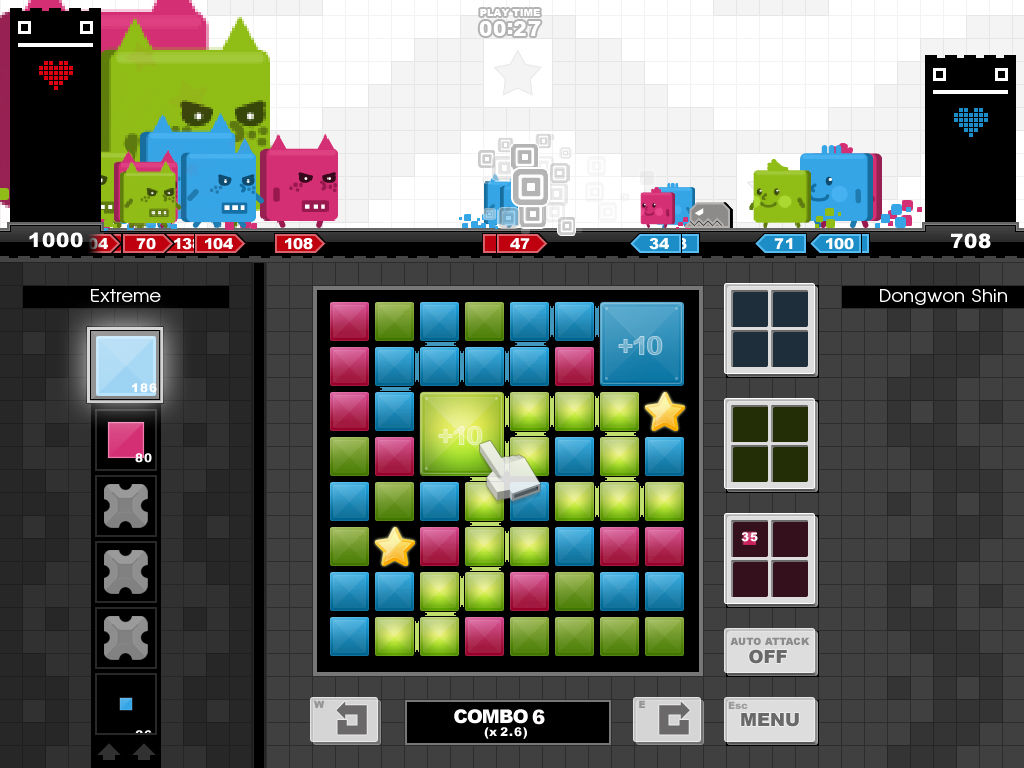
Okay, so recently, I've been playing a few "Casual" games. Things like Tales of the Orient: The Rising Sun, that sort of thing. And it's pissing me off. Why is it pissing me off? Because they don't think the game is good enough. That is, of course, a subjective opinion, but it's hard to get rid of when there's a lot of unnecessary shite around what is, essentially, a Match-3-Or-More game (the -Or-More comes from one of its mechanics).

This is the game...

The game itself is, as mentioned, a Match-3 game. Or rather, three different styles of Match-3 in one game, because you can pick to play any level with one of the main three types of match-gaming mechanics: Click a cluster to get rid of tiles, click two clusters, swap 'em, and maybe get rid of two sets of tiles in one go, and drawing a line from one matching tile to another through matching tiles to get rid of tiles. It's a game about getting rid of tiles, and our lizard brain is fine with that.

What our lizard brain is not fine with, however, is annoying pop-ups with story that I don't care about, and my hindbrain definitely doesn't give a shit about (no boobs, no compulsive behaviour, no fine asses... Nope, moving on!)

...And this is your reward (sans annoying pop-ups), as shown to you by a player who is better than you will ever be.

Essentially, there is this city that got destroyed, and a bunch of refugees, including three chucklefucks who are going to be giving you annoying popups for most of the game, want to rebuild elsewhere and be safe and yada-yada-yada. No really, all I hear past that point is a combination of endless chatter and "YOU MUST CONSTRUCT ADDITIONAL PYLONS", because that's essentially all the story boils down to. You click tiles to build up the refugee city, and you are going to be faced with a screen that shows how your village is progressing, complete with stylised people, with the occasional pop-up saying "Oh my, this thing is important for our village because reasons, you have to build it [which will take a longer number of harder levels the further you are in the game]"

It's a waste of good art resources. Why?

Because nobody wants to be told to continue the game. And while it may seem to the developers that they were rewarding the player, they really aren't. Because it's the wrong damn game for it. And because it's not actually a story, it's a framework that's been shoved into the role of story. Fuck. That.

See, even most of the nerds are happy!


Now let's look at Girls Like Robots. Surprise surprise, it's a casual-ish puzzle game. But the story isn't based on telling you what reward you have to get next, it is the reward. And it's pretty gosh-darned cute, too. I won't spoil it for you, but it's silly, it's romantic, and good fun. And guess what, it doesn't tell you you have to continue. I mean, look at that screenshot, and tell me you don't want to see more smiles (or angry faces, if that's your thing!)

Battle mode never looked so CUUUUUUUTE!

Or why don't we go the other way, and look at, say, Circuits, or Clickr? Neither of those have a story, and I love them both. Not because of their nonexistent story, but because their art styles work, they have fair to good mechanics, and there's no damn popups telling you you *have* to finish this level or the people you don't care about won't thrive. Oh, and the music helps too.

And guess what, Green Sauce? One's cheaper, one's the same price, and one's only a quid more expensive.

I've found exactly the same thing with racing games. Blur wanted me to care about a plot from some random Need For Speed game, while having substandard netcode, a flawed matchmaking system, and track design that allowed one player to DNF everyone else if he was halfway good and got to a nitro first on at least three of the tracks. Pyroblazer wanted me to care about its Post-Human Space Opera, but neglected the fact that a game where a mechanic becomes mandatory isn't nearly as fun as a mechanic that lets you be a pro if you learn it. Meanwhile, Wipeout let the backstory be there for anyone who wanted to find it, and Burnout Paradise largely didn't give a fuck about story, preferring that you just roam around a city blowing shit up.

So here's some protips for devs:

- Story is a reward, a spice. It isn't something you try to shovel.
- Story can be ignored if you have everything else right, in most varieties of games.
- Make sure everything else works, and if you're going to have a story, that it fits somehow. That last one really trips a lot of people up, and is the core of what I'm bitching about here.

Saturday, 3 May 2014

Game Things That Make Me Rage Part 1: Hidden Object Madness

There are some spoilers in this post for games you probably shouldn't play if you value your sanity. So, if you're the type of person who actually enjoys this sort of thing, don't read this post, because I'm going to be spoiling something you might actually buy. And I'm not sorry at all for that.

Having been a game reviewer (and technically still being one... It's like being a book critic, you just can't let go of basic skills), there are things that really piss me off, and are guaranteed to have me pan your product. In this post of unwieldy titles, and the ones like it, I'm going to be talking about some of them, and we're going to begin with something that I have a love-hate relationship with. Mostly masochistic hate.

There is an entire genre of games that dare call themselves Adventure Games. They are not adventure games. No. They're Lovecraftian abominations of bad writing, shitty puzzles, and a level of effort best described as "ADHD Stoner who's forgotten what the fuck he was doing."

They are... Hidden Object Puzzle Adventure Games. And I can even recite a fucking checklist that a hell of a lot of them fill. So let's go through it, shall we?

Many of them contain some hackneyed supernatural threat

I'm looking at my "collection" (mostly gotten from Indie Bundles, GG sales, and the poor fools at Cateia who sent me two in a row, despite my reviews), and over two thirds of them involve either demons, witchcraft, psychic powers, ghosts, or a combination of the above. It's enough to make anyone who has even a vague background of occult research weep. This wouldn't be so bad if it weren't for the second point.

The writing is moment-to-moment drama, with little to no consideration of overarching plot or sense.

Right, let's start pulling examples out here.


This is The Gift, by Alawar Games. I somehow managed to get what I'm assuming is a third to halfway through before quitting for health reasons (Apoplexy is bad for you, mmmkay?), and part of the reason is that bad writing offends me. Amusing, considering I am told I have a somewhat loose grasp of grammar. But grammar is one thing. Random for the sake of drama is another.

The game begins, sensibly enough, in an alternate 1930s style setting, where our southern belle on the cover, a disgraced occult detective, is called to investigate a murder that may be (is) related to a closed case involving ritual murders by spell. Okay, I can deal with tha-

Oh, wait. a vision from the murder scene leads us to a witch's occult store, who then grabs us and gives us another vision of another place, and somehow it turns out that our ex-partner is involved, along with some dude called Riker who we appear to have no reason to care about, and then it turns out someone in our circle was meant to meet the witch in the diner, and somewhere along the way we got actual magic powers instead of some fucked up version of psychometry, and then it turns out that the serial murder is actually going to kill usssss allllllll, starting with a small child who is the next target because oh-look-we're-pulling-your-heartstrings. Oh, and your partner is suddenly missing around the same time.

Did I mention that this oh-so-scary malevolent force is called... Wait for it... Suspense! The Nothingman.

Even writing that down made me clutch my head in psychosomatic pain. Now, let's look at another example of the genre from another company. Nightmares From The Deep: The Cursed Heart.

This one isn't so much an offender because the plot beats are nonsensical (although they are), but because everyone is a fucking idiot. Let's use the beginning of this "masterwork" to illustrate this point.

Okay, so our main character is a museum curator, who wants to hold an exhibition based on a pirate that's cursed or somesuch. She even manages to get the pirate's body, and his supposedly magical kit that he got in a deal with a demon (see? Ghosts and Demons!). Naturally, she wants to display the pirate with his gear, because a pirate without gear isn't half as awesome. So far, so good.

But the first time she puts one of these artefacts on the pirate, the room starts shuddering and he glows with what I'm sure the creators felt was an "eldritch light". Let's leave the graphics out of this, though, and continue on our theme. Okay, that's weird, but once isn't really a pattern, right?

If you guessed, from that last sentence, that she does this twice more (Rule of Three is, by the way, an important thing in gaming), that the second time has more effects (that she rationalises away), and then, in what is actually a mildly spooky display, all the lights tinkle and break, spooky things happen, and her reaction is...

"Oh, the lights went out, how odd, I'm sure this has nothing to do with the cursed items that have incredibly obvious and dramatic foreshadowing that is apparent to anyone with working sensory apparatus!"

Her sister, by the way, is also at the museum, because family are cool. Unfortunately, in this game, family are not cool, because her sister is afraid of the dark, and the main character's reaction to this revelation? "Nope, need the torch for fixing the fuse. Nope, can't come with, you stay by this dead pirate who might not actually be so dead anymore, but what would I know, I'm a Clueless Protagonist (TM)"

I think you can guess what happens next, at least in general terms. If you can't, then I'm sure this game will suit you down to the ground, along with the joys of removing fleas from your troop-mates and flinging poop.

The Main Mechanic... And Infinite Monkeys.

Okay, so there are two main mechanics to these games. One of them is the standard adventure game "Use object on other object to progress story or remove an obstacle in some fashion", with all the joys and problems therein. This, surprisingly, is not the problem, as many of the solutions are common sense. Not all of them, just many, and frankly, I'm thankful the proportion is that high.

The other mechanic, however, induces fits of rage in me that would surprise many of my close friends. You see, the other main mechanic is the wonderful idea of "Find hidden objects in among a bunch of junk to progress the story... somehow."

Let's go back to The Gift for this one.


Okay. So this one, if I recall, has at least a modicum of sense behind its general placement (being in a home somewhere). But you will find very similar scenes that you have to play through for your reward of more game in the unlikeliest fucking places. An altar. A beach. An alleyway where fuckdammit I've already been here (more on that later). But there are things this screenshot is not telling you. For example, guess how many of these objects you get to keep for solving actual puzzles? At most, three. And most of the time, it's just one. Usually the hardest fucking one to find.

Then there is the fact that the writers often just fling darts at a dictionary, then the artists shrug and draw whatever the fuck comes to mind with that word. In another game by the same company, you have to find a pole-axe. As in a polearm. As in a very long stick with a sharp thing on the end. There is no such thing in among the random junk. But hiding on a tree branch is a bog-standard axe. This is what you're looking for.

You'd think, what with the hiding things to break up their visual profile (a common dirty trick in these games), colouring them exactly the same as their surroundings (a very dirty trick in these games), and literally hiding things inside other things with no hint that they're there (Oh, hi, Cateia!), that the litany of stupid wouldn't end there. But no, even in the HOPA games where you aren't somehow involved with the supernatural, you have a magical ability. It's a magical ability that all HOPA protagonists have: The ability to peel fucking graffiti, etchings, scratches or paintings from a wall, and say "Yup, that was the thing I was looking for, yessiree bob". Sometimes, these are the actual puzzle items for the more traditional adventuring portions. This wouldn't be so bad, if it weren't for the other sins these things pull.

Where am I meant to g- THE FU? THAT WASN'T THERE BEFORE!

Backtracking is a Bad Thing. Most games, nowadays, appreciate this. HOPAs mostly don't. The Gift is an excellent example of this, because, on the flimsiest of contexts, it will send you somewhere you're pretty sure was only a single-puzzle room, where, all of sudden, there will be a pile of garbage you've never seen before, or a thing you just thought was graphical flavour has magically turned into a garbage pile or puzzle. The alleyway in The Gift is definitely the worst offender here... The pile of garbage that you have to sort through has a fucking trolley in it. Guess what you definitely can't see in the alley before you find the general area has changed your context sensitive pointer to "GARBAGE TIME, BIZHATCH!"

Some games in this genre will throw you a bone. Shadows: Price For Our Sins , for example, has an actual map, which also shows whether there's shit to do in a location or not. But most of the time, though, you are reliant on the hint function. Which, once it has led you to the actual puzzle, will shut down for anything up to 10 minutes, depending on difficulty settings. By the way, this is the same hint button that shows you where that one fucking object you can't find because the artist was too creative with the skew function in Photoshop is.

Now, this wouldn't be so bad, if it weren't for the fact that most first time players will buy into the whole "ERMAHGERD, TIME LIMIT" thing that all these oh-so-dramatic stories have (The Gift: NOTHINGMAN IS GOING TO KILL EEEEEEEVERYBODEEEEE. Shadows: MY FRIENDS ARE STUCK IN HEELLLLLL. Nightmares from the Deep: MY SISTER GOT KIDNAPPED BY A GHOST PIRATE WHO'S GOING TO SACRIFICE HER TO GET HIS WIFE BACK...).

It becomes a lot less dramatic when you realise how utterly prepared the entire world is to fuck you over, though. Which leads nicely onto my final point.

A World of Puzzle Locks


Puzzles in adventure games, hell, even in roleplaying games, are a wonderful idea when done right. Oh look, the evil Lord Fzqefwuk was a joker, wasn't he? We have to solve this word-play riddle before we're all mashed into pulp! Seriously, a good puzzle or riddle can actually buy a GM time, and still be entertaining. It's cool.

But there is such a thing as "too much of a good thing", and HOPA slamdunks that principle, along with other useful ones like "common sense" or "sanity". I don't remember the pictured puzzle, it's probably from further along in The Gift than I got. But if you thought Resident Evil was bad for puzzle locks and fucking weird shaped keys, you ain't seen nothin' til' you've seen a HOPA! Lemme pull an excerpt from my review of "Where Angels Cry", by Cateia Games. 

"Play towers of Hanoi... again. Rotate pictures to get 1 sixteenth of the items you need to finish the act. Look for other hidden items (angel statues) for dubious achievement awards. While you're at it, why not wince at some truly terrible voice acting (It's-a-me, italiano-stereotype-ah!), and wonder at how these monks (who are obviously involved in some conspiracy, because DRAMA!) ever get any work done."

To get two rooms in one direction, I seem to recall needing something like twelve red and blue gems, a Towers of Hanoi puzzle, some tile puzzle I brute forced, a colour matching puzzle I brute forced, and about six hidden object minigames. The monks, meanwhile, have obviously memorised the puzzles, and have gems coming out the fucking wazoo, for they are freely able to move around. And no, the puzzles don't follow any sort of difficulty curve, why would you think that? You're just as likely to find that one annoying "shuffle shit around till it's right" puzzle near the end of the game as you are the "glorified jigsaw."

In Summary (or perhaps In Memoriam)

Hidden Object Puzzle Adventures are evil. But I keep playing them in the misguided hope I'll find a few that aren't terrible, and because, as much as they are a dark stain against everything that is good in game design, they still fondle our lizard brain enough that the masochism continues. Now, if you'll excuse me, I have to go to the kitchen and make a nice calming cup of tea...

...Now where did I put my lizard crest, twelve blue beads, and solution to the crossword on the kitchen door?