Showing posts with label Reviewing. Show all posts

Wednesday, 25 March 2015

On Games Journalism: The Complications.

So, Joe Martin, a short while back, wrote a deservedly scathing piece on Games Journalism and Money , specifically the phenomenon (Which I myself have fallen victim to at least once in the past, for reasons I'm going to go into) of unpaid reviewing, often badly justified. I'd recommend you read that piece first, because it's an actual concern, and it's pretty widespread. Furthermore, I'm going to go into a bit of detail as to why this hurts the industry in general.

So, the problem of pay is one that has struck journalism all over, but has affected Games Journalism on pretty much an endemic basis, pretty much since the internet hit. There are also several factors that complicate things, and it's those I want to go into a little.

There Is No "Ideal" Pay Scale


I thought I understood this game at about five hours. Then I hit the biiiig difficulty spike for completionists at around fifteen. I still play an hour or two every now and again, but it will be a long time before I finish it.

That you should be paid for your writing, and that the review copies are tools for your job, not the pay itself, is indisputable. It is a product you are meant to review, for your job. But there are only two types of payscale out there: Flat rate, and per [X Period]. Neither of them are ideal for games reviewing. Let's start with per hour, to illustrate the point.

Let us say I am paid £6.75 an hour (Pretty close to the minimum wage for my country) for reviewing one of two games. One of them takes four hours to complete (Allowing a complete picture of the game), another can be completed in thirty hours, but a complete picture of how the game works may take up to fifty. Bam, instant lack of incentive to choose the smaller (But possibly better) game. It doesn't help that, unless it's on Steam, your editor can't actually check how many hours you've played unless all work is done in the office. As any freelancer can tell you, this mostly isn't where you're doing things from.

The same applies to a flat rate, but the other way around... I am encouraged to pick the smaller game to review, because it will give me a better return on my writing. It must also be noted that how buggy a game is can further skew this, one way or the other. Sword of the Stars 2, for example, brought my computer to a BSOD four times when I reviewed it, and if that had screwed my computer? Well, then either the editor has to fork out for replacements (Providing the company has such policies, and really, since they're also tools of work, they technically should), or you're out of pocket for not only the review (Which won't be able to be technically finished), but also the replacement parts.

"What about a sliding scale?" Ah, well that disincentivises the editors and owners from larger games. They have to pay you more, for a larger product.

Personally, I'm okay with a good flat rate, and so are most folks I know. But it's not ideal, and I doubt it ever will be. But so long as I feel compensated for the hours of work, I'm good.

Many Editors Won't Take Ex-Unpaid Writers

You may like my writing, you may not. I hope you do, because I enjoy writing, and I enjoy talking about games. But the very fact that I have, in the past, gambled on a startup which has pulled this unpaid (Oh, but we'll pay you if the site starts paying out!) bullshit has, and will bar me from writing for many paid sites.

In my defence, I will say that unemployment makes you do desperate things at times, reaching for any olive branch that will even have a chance of getting you out of the dole queue. But it also needs to be said that punishing the potential writer for taking such a gamble, out of desire for entering a field that, quite frankly, isn't amazingly friendly to newbies (Due to limited paid positions, and a relatively low turnover in writers) is Not Cricket.

Judge a writer by their writing, by their passion, their style, and their eye. Please don't judge a writer for falling for promises, because as it stands, it's not easy to get in to the treehouse.

Why It's Hard To Get Into The Paid End


A selection from Gamejournalismjobs.com ... Most of these adverts can and will use the language in Joe's article. Oh, it's always so fun to scroll through the- [shoots self]

Go google game writing jobs. I'm a member of a LinkedIn group for video game writers. I search every now and again. And 90% of what you find will effectively be these unpaid internships. Even many of the "paid" positions will either have some restrictive conditions, or will have catches. I'm looking at one right now that isn't paid in the work sense, but offers $30 for the "best contributor of the month". Of the month. I'm looking at another, and I don't actually see a mention of pay beyond its existence. I may ask them what, exactly, they're paying... But I don't expect a very useful answer.

I can remember the last time PC Gamer made a call for new freelancers. because I sent a piece in. I can't recall getting a reply back, though. And you can guarantee a lot of writers applied. We've already mentioned low turnover on paid sites, but another problem is knowing which sites pay. Because you can guarantee jobsites like Indeed or LinkedIn aren't too helpful. You can definitely guarantee many places and groups specifically for game journalism are going to be a fucking slog, because all of them, to some extent or another (With an average of "Two hours before potentially finding an actual paid job on a given day) suffer from the problem I've already mentioned.

It's Not A "Real" Job

I'm writing this one from a mainly UK perspective, but it's true nearly everywhere that, to many folks (Including our "lovely" Department of Work and Pensions), writing reviews, much less games journalism, isn't a "real" job. Never mind that breach of contract is a real thing. Never mind that reviewing and games journalism has a code of ethics. Never mind that, if you're doing the job, you should get paid for it. Getting advocacy for rights to the pay that you deserve is an uphill struggle, because the majority of folks who could advocate for you, who could punish potential employers for an unlawful (and unethical) internship contract, aren't going to, because people still think of games as this limited, almost whimsical field.

"Oh, you play games for money? How quaint."

Yeah, tell that to the QA Team who are tearing their hair out (sometimes literally), right this very minute, when they're told "Oh, we'll wait for the Console QA team to report this bug before we take it seriously" (An actual thing I have heard from at least one QA lead, although I will protect the sources). Tell that to the copywriters, panicking because there's no way anyone's going to buy this thing the company rushed, no matter how they dress it up, all over a fucking release date. And tell that to me, who lost at least one computer in the line of reviewing, who has had companies stop talking to him because he wasn't afraid to say that their product was deeply flawed , and who has been told at times that 26 hours is nowhere near enough to have an idea of how to review Skyrim... Despite the fact that the game can be completed in less than 20 if you don't faff about, and a number of other factors that conspire to say "Why yes, actually, you can get enough of a picture in 30 hours to review quite a lot of games."

It All Ties Together


Image Source: An article by The Drum on "The Ad Tech Minefield". Only somewhat fitting, but still...

Of course, this leads to a gigantic interrelated clusterfuck. We're saturated in potential viewpoints, and that's good, variety in viewpoints is useful for reviews! Problem is, for the newcomer to the field (Or even someone like me, who did 3 years of reviewing and games writing), it's not easy to get paid. You're going to get a lot of heartbreak, a lot of applications with no reply, and you're going to be told that it isn't a real job. It's tempting to write somewhere for free, but the very act of doing so, no matter how much it builds your skills from practice (And hopefully mentoring) is going to close doors on you.

It's small wonder so many folks are trying to pay their bills through crowdfunding, and I'm going to be doing the same as soon as the materials are in place. Because we're not a friendly field... In fact, right now, we're a minefield. And it's going to take a lot of work to dig out those mines.

Friday, 13 February 2015

Games Journalism: We Are *All* Only Human.

For anyone keeping up with gaming news, Peter Molyneux recently got it in the pants over Godus. Bigtime. While some things needed to be said to the British GameDev Wunderkind, others didn't, and it made me think of something we tend to forget: Everyone in the Games Biz, from the devs to the journos, to the players, are only human. And we tend to forget this. All of us.

The Devs

Warren Spector, from Martian Dreams.

Richard Garriott. Warren Spector. Graeme Devine. John Romero. These, and many more, are names to conjure with in the games industry. But we, both players and games press, tend to overlook the oddities and failings of these folk. Go look at Martian Dreams and Savage Worlds. You'll find a literal self insert of Warren Spector in both. In fact, Wikipedia has a selection of his self-inserts on the page about him.

They're good folks, but they're not rockstars. They have their failings. Tabula Rasa was a flop. Thief: Deadly Shadows definitely had flaws. Even the series I'm currently Let's Playing, Wipeout, Made Mistakes.

But we have a tendency to ignore this, and when we do discover folks have their human qualities, not necessarily good ones? We tend not to react too well. An extreme case in point: Phil Fish. Phil Fish is another dev who's been raked over the coals, for the crime of... Being abrasive and temperamental. And because he is a public figure, a celebrity... The reaction is disproportionate.

But let's look at the other two sides here.

The Journos

As someone who used to review, I'm just as guilty as every other game journo out there for being attracted by something that just... Doesn't... Work. In my particular case, a prime example would be Nuclear Dawn.

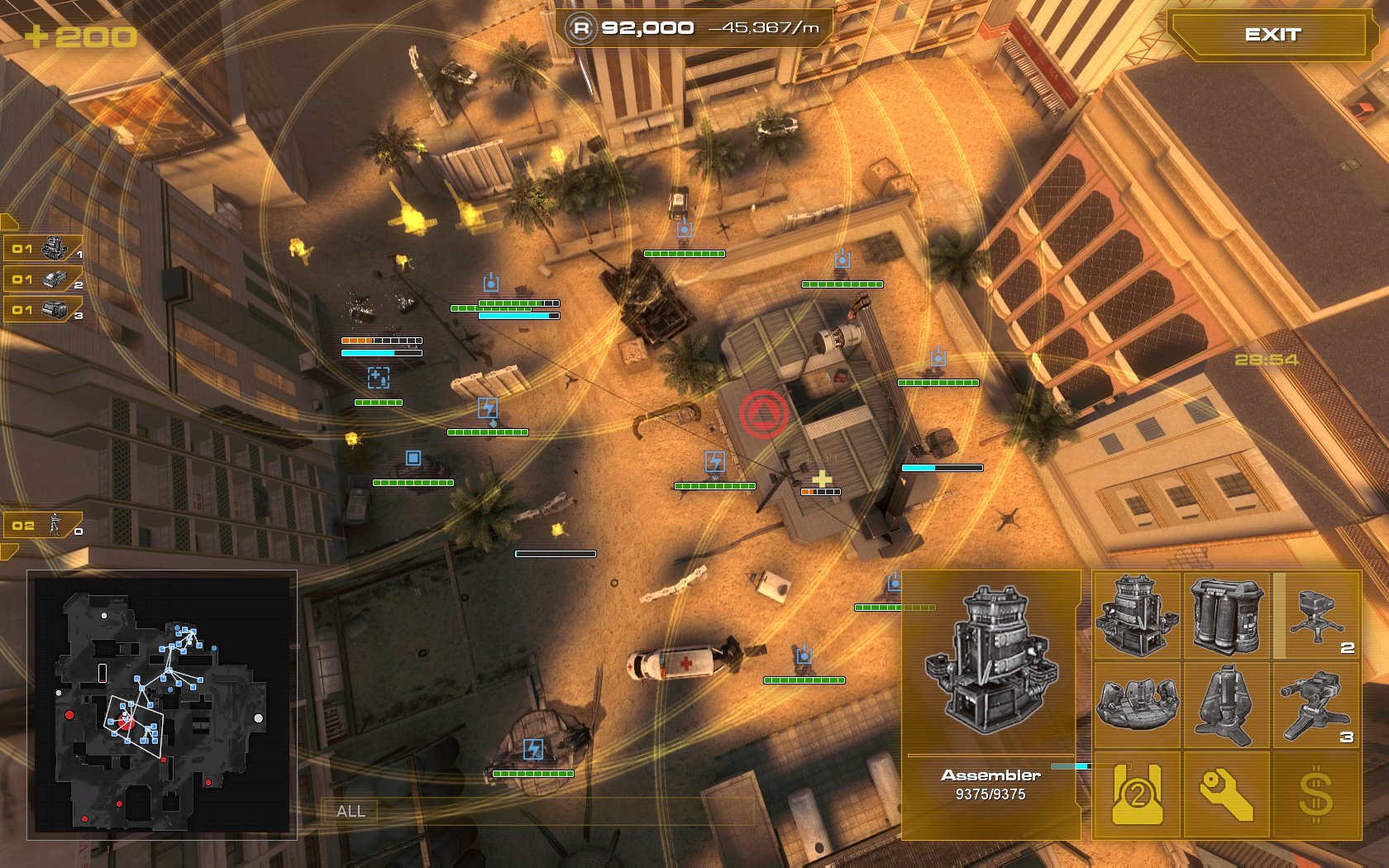
If you can instinctively make sense of this, congratulations, you could be a Nuclear Dawn Commander!

What, you haven't heard of it? But it rewards good team-based play, actually talking to other players, and... Oh, yeah, it didn't do very well because it wasn't accessible to the average player. See, the average player, for various reasons, just wants to god-damn play. They want to shoot mans, not stand in a corridor waiting for an enemy push they're not sure will come. They definitely don't want some asshole telling them what to do (Especially if said asshole turns out to be incompetent), and they don't want to spend time guarding said asshole from the enemy, even if that's a vital element of the game.

So what ended up happening was that whoever co-ordinated and/or had a decent team leader would steamroll the pubbies. Again. And Again. And Again. And lo, it Wasn't Fun. So the servers were nigh ghost towns, and the game didn't do nearly as well as its interesting gameplay could have gotten.

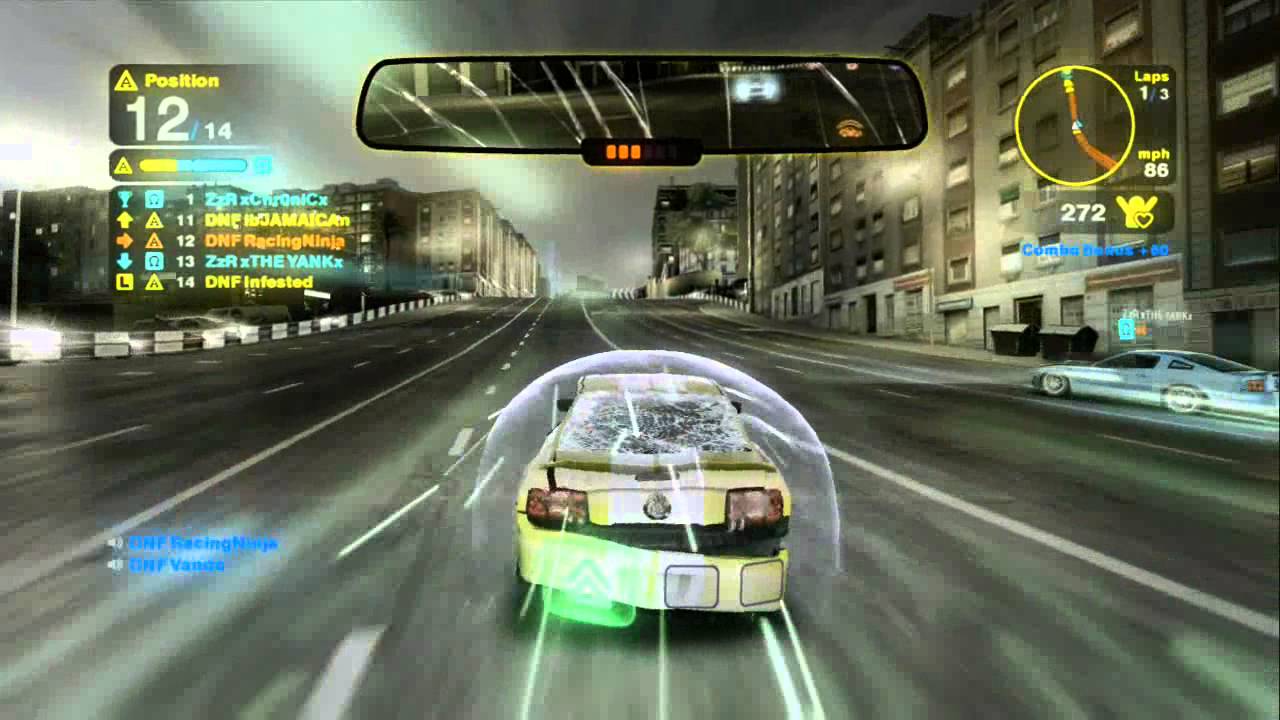
On the other end of things, for me, was Blur, by Bizarre Creations. Blur had problems. The track design meant that a reasonably skilled player could DNF (Did Not Finish) all the other racers on many tracks, people were having connection issues out the wazoo, and a third to half the vehicles were basically reskins. But the first part and the third in our equation, Players and Devs, came into play here...

Blur: The Big Boys Mario Kart. Oh ho. Ho ho ho ho ho.

...You see, Bizarre Creations also made Project Gotham Racing, which was, in many folks' minds, a Good Series. So when a review score was lower than expected, they came out to complain. I didn't get a whole lot of complaints (A whole ten, I think... I'm not a celebrity writer, never was), but, on the strength of those, my editor at the time claimed that I had been "experiencing day-one issues".

Three months later, I issued a re-review (Something many game journos will tell you is a bad idea), and nobody appeared to care one way or another. Bizarre, you see, had started copy-pasting responses to bug reports, claiming it was being fixed, while already talking about a sequel, and working on another game (Bloodstone, which also Had Problems).

They folded a few months after my re-review. Now, here comes the weird part. The players came out again, but they didn't yell at me (Who scored the game pretty low). No, I opened up the letters page of PC Gamer, to find someone blaming them for the demise of Blur. This was pretty irrational, as PC Gamer had been a lot nicer than I had, and didn't even mention many of the issues seen with the game.

It was a head-shaking experience. But it leads us nicely to the third part of our little equation.

The Players

The Bush-Wookie in his natural habitat.

In a very real sense, the players are a more diverse group than either the developers or gaming press. But what you see isn't that diverse at all, because what most folks see of a playerbase are comments, forum posts, and meeting them in actual play... And the bad tends to stick out like a sore thumb.

The Mass Effect 3 Ending. Starbound's "Caveman Tier" play. Fucking Bush-Wookies. The list of things players complain about, not always making sense, is immense. Let's take the Bush-Wookies as an example.

Bush-Wookie is a nickname for Snipers in the Battlefield series, especially Bad Company 2, because their camouflage... Well, it makes them look like Wookies from Star Wars. Also because it helps them hide in bushes. Duh.

The problem is, a good sniper, in pretty much any multiplayer game, can lock down entire areas of the map. And it's a massive pain in the arse to dig them out. Never is this more prevalent than in the Heavy Metal map of Bad Company 2.

Heavy Metal, aka OH FUCK LEAVE THE SERVER.

The map doesn't show it very well, but the middle capture point here is flanked by two hills, and there's an AA gun in the village, just off to one side of the point itself. Snipers/engineers in those hills can fire as far away as either of the other capture points, and getting them out often requires air support, which... Oh. Oh. Again, we find that the fun of the game is instantly ruined for the average player if they're up against a co-ordinated team. And, in the case of BC2, it doesn't even have to be voice co-ordinated, because the classes make it fairly obvious where you should go. The snipers will graduate to the hills, because there's a lot of cover and disguise up there. The engineers will graduate to the hills, because it's relatively safe from the AA guns, and allows them to kill the vehicles they're meant to. Meanwhile, the medics will assist the assaults, who will die in droves as they either try to take the next point along (Which will have everything coming their way), or try to take B (Which will be protected by a force that can efficiently deny you entry if they're even halfway competent)

In this map, among others, snipers are a massive force multiplier. It doesn't help that playing a sniper as realistically as possible (Moving after shots, not revealing themselves as best they can, staying outside the range of the other classes) means that the sniper has a reputation as a player out to ruin other people's fun.

It's not an entirely unfair point either, because some of them genuinely are. Which is annoying, because there's no easy solution. Battlefield 3 went with making snipers easier to spot and more likely to get into short range firefights (Which they'll often lose), but this makes playing a sniper less fun.

Wait, that's not the right image... DAMN YOU, GOOGLE SEARCH, YOU SHOULD HAVE TOLD ME WHAT TO LOOK FOR!!!

Part of this problem though, is that players go in with expectations, and when those expectations aren't met, they're unhappy, whether because it wasn't properly explained what sort of game it is, or because the mechanic was genuinely badly designed... Often, it's because they just don't get it. Good example of that: The Portal Gun. The Portal Gun doesn't make portals on anything but white walls (Covered in moon-dust, apparently), and both games try to show you this. But, because they don't explicitly tell you, and remind you, you get folks who completely fail to understand how it works.

Those people aren't necessarily stupid. The game isn't necessarily bad. But the players' expectations coming into the game may be unrealistic, or the game isn't communicating to the level of the average player.

Even this commentary on expectations is going to be subject to problems. I've seen these points examined before, and you know what I hear when they're discussed?

Entitled. No Moron Left Behind Policy. I Shouldn't Need A Tutorial, Or To Read The Manual.

Yeah, okay, players can be entitled (Oh, dear lord, they can be entitled!) It only takes a quick look at comments on negative reviews to see that ("How DARE you give X a 6/10! It's CLEARLY PERFECT!"). But many of these are knee-jerk reactions, whether on the part of devs, or players, or journos, and there's no easy fix for any of it.

No, really. We could say "Devs, please try to be more human", but that won't work without players shifting their worldview, and journos not instantly squeeing the moment Big Name is mentioned, and a lot of other things, too. We could say "Journos, please think more critically", but that would require devs and players alike agreeing what that means... And we've all seen how well that's been going so far... We could say "Players, please try to read tutorials more/shift expectations", but that's massive generalisations about a very diverse group, and it can't help but offend at least some of them.

We could say a lot of things, but a lot of it has to do with one basic principle, which I fully understand is hard for people (myself included). Be More Aware. For example, be aware that once a game has a flaw baked into it, it's often going to be very hard, even if you genuinely are a rockstar super-developer, to change it and/or get it out. Be aware that sometimes, you're not going to like the writing in a game, but that's no reason to scream bloody murder (Sometimes quite literally). Be aware that not all games are for you, specifically, unless you truly want to learn how to play them. There's a lot of "Be Aware", and while all those examples were for players, there's a lot of others for the journos and the devs too.

Funnily enough, this blog post isn't about fixing the problem. It's about Being Aware That It's There.

Sunday, 14 December 2014

Why "Objective", Performance/Tech Based Reviews Are A BAD Idea

So, one thing that I have seen people calling for is "More objective" reviewing. Sometimes, they mean "Less biased overall" (Which is good to ask for), sometimes they mean "I don't want political viewpoint X to be represented so god-damn much" (Tough titty, writers have political viewpoints, readers have political viewpoints, and if you don't want to deal with gender and politics, good fucking luck in life. No, really, good fucking luck.)

Sometimes, however, they really do mean "objective", in the sense of purely representing the technical aspects, how well it runs, etc. Let's illustrate how misleading this can easily get with two hypothetical reviewers. Let's call them Jim and Graham, after Jim Rossignol and Graham Smith.

Jim has a computer which often meets minimum specs for AAA games, but rarely optimal specs for the newer ones. So he can play the game, but he can't afford to get the whole experience (Because, spoilers, even guys who write full time for a mag don't get paid a whole lot!). He experiences some slowdown at certain points in the game, but, unbeknownst to him, this isn't because his setup isn't top notch. It's because he's using an AMD graphics card, and the game was primarily coded around NVIDIA cards. Yes, that's a thing that still happens, even to this day. So he, naturally, mentions this as part of his review. NVIDIA fans slam him.

Graham, meanwhile, has a swanky computer with all mod cons, an NVIDIA card, and... A top range anti-virus program. This causes some problems, and, because he has a top of the range setup, he makes a bigger deal out of it. A week later, it's discovered that his particular anti-virus program fucks with the game, and he looks like a twat.

Meanwhile, both of them use different routers, and have exactly the same problems in multiplayer, problems which are widely reported. Their editor, Steve, doesn't have these problems, and writes an apology about both pieces when the folks who didn't experience these problems, and didn't notice all the complaints, decided to write in to say that they shouldn't lower the score based on this "nonexistent problem."

...Three months later, the readers look like twats when it turns out that, yes, the netcode was shit all along, and they start experiencing problems and complaining. And nobody's happy.

All three of these things have happened at least once. Because there are so many different components for PCs, software and hardware, and that means Your Mileage May Vary. I've seen windows updates, graphics driver updates, lack of graphics driver updates, all sorts of things fucking with performance in games that sometimes, it's hard to tell what's actually causing a problem.

"Ahhh, but consoles are different!", I hear you say. Perhaps. But sometimes, consoles look like they're working when they're actually about to break, and this, too, can occasionally affect reviews. Less than PC reviewing, it's sure, but you still have to use a router to connect, an ISP, so keep in mind that no system is free of this.

Then, we come to another issue: With only certain exceptions, older games re-released will, on a performance based scale, consistently score higher than newer ones. For example, I can play Jet Set Willy with so much less hassle than I used to have. Before, it was "pop a tape in. Is the tape clean? Is the cassette drive jammed? Do I have the cable connected?"

Now? "Put thing on hard drive, run program/emulator, fiddle with performance settings a little." 100000/10, much god-damn better than it used to be. Sonic 1 runs far better, on my current system, than Lichdom: Battlemage, and so it scores higher.

"That's not what we said, though! We meant as they come out!"

Ah, you're right. But re-releases are often reviewed as new products, because some of them (Not all, but some) come with slightly swankier graphics, and a slightly improved engine, and nothing else. Oh look, that re-release, on a performance base, still runs better than brand new AAA game, because it didn't have extra fancy gubbins.

Indie games would consistently score higher on a performance basis, because they're less resource intensive and smaller. The simpler the game, the higher it could score on a performance basis. And then comes the real killer: You then have to consider how much performance the game needs compared to its compatriots. Is it "objectively" better because it needs less resources, or "objectively" worse because it doesn't need to be as effective in using your computer's resource allocation?

"But you don't need to know these things, all you need to know is whether it's 'objectively' good or bad on your system, let readers..." No. Stop right there.

"Good" and "Bad" are rarely objective statements, because they're value judgements. You're stepping into "Worth" territory, and if you think that's something that can be objectively judged, I'm going to laugh. Hard. An object's worth changes, fluidly, based on subjective factors.

Good example: The white jacket I wanted for ComicCon. It's worth less to me now that I don't need it for a costume, because when I tried to get it, it was for a specific purpose. That purpose has been and gone, so it's "worth" less. If other people don't like how I look in it, it's worth less based on their subjective views, because it's going to get dickheads yelling stupid shit at me, which reduces its worth because of the hassle it cost me. If I lose or gain weight, it's going to hang differently, look differently, and so have a different worth to my self-esteem.

Then there's all the factors you're now leaving out, whether due to space or time constraints. Most reviews are 500-2500 words long. That's it. Are you going to read an article that's 2,500 words about how it performs on System X with Hardware Y,Z,A, and B, when you yourself have System X with Hardware C,D,E, and F (Not to mention that the reviewer probably won't have even noticed that Software G, which you have, and they don't, causes bugs in the game)?

Would you read it if it didn't comment at all on the writing, or great moments in the game, or how a mechanic feels like it fits with the theme you think they're trying to portray? All of these are subjective things you'll be missing out on: The cornering on Burnout Paradise isn't, by any means "Realistic"... Hell, describing it objectively, it would be "The lower statistic X is, the more likely it is to rotate the vehicle you are driving in a manner more consistent to 'sliding' than 'turning' , especially at higher speeds." ... But it's fun, not to mention collisions. We like collisions in racing games, right? "The collisions are rendered using a physics engine that -" GOD STOP, PLEASE, THIS DESCRIPTION CAN GO ON FOR HALF A PAGE, AND IS NOWHERE NEAR AS EFFICIENT, FOR A READER, AS...

"The collisions, meanwhile, are sufficiently meaty, with lots of crumpling, slow motion replays, and a delicious feeling of 'Yup, that car is fucked, and there is no consequence for this. God bless Fun'."

Which is, you'll note, largely subjective. Long live subjectivity, I say!